.png)
Anna Bjurstam: "You Can Have Perfect Biomarkers and Still Be Deeply Unhappy"

The wellness pioneer on what luxury hotels are getting wrong about longevity, why wellness needs more pleasure and less punishment, and why women should stop following health advice designed for men.
Anna Bjurstam has never been particularly interested in the expected path. A foot injury sidelined her from competitive basketball at 18, and an off-season aerobics class launched her into a fitness career. She earned a master's degree in finance, turned down offers from McKinsey and Boston Consulting Group, and joined the fledgling Swedish gym company SATS instead. Within a year, she was overseeing around 300 employees.
Then a ten-day silent meditation retreat in 2000 rearranged her priorities entirely.
"I realized that physical fitness was not everything," she says. "You need emotional, mental and spiritual fitness as well."
Around the same time, Anna co-founded Raison d'Etre and helped create an early wellness spa at Soneva Fushi in the Maldives. While luxury spas were still largely focused on beauty treatments, her team introduced yoga, meditation and detox. The resort later took over the operation, which Anna describes as part of the story behind what became Six Senses.
It was the beginning of a career spent anticipating where wellness hospitality would go next. Anna developed concepts for brands including Aman and Four Seasons before beginning a 13-and-a-half-year relationship with Six Senses in 2013. As Wellness Pioneer and Senior Strategic Advisor, she helped turn the company into a global wellness leader and spearheaded Six Senses Place, its first urban membership club.
Now she is channeling that experience into Wahayla, her new venture helping hotel, fitness and cruise brands create what comes next in wellness, longevity and human experience.
Few people have done more to shape what modern wellness hospitality looks like.

You turned down consulting to help start a gym chain with no track record. What made that the obvious choice for you?
It was what my heart wanted, even though it was not the practical choice on paper.
My father was not thrilled. He thought his daughter was finally going to get a reputable job, and instead I was starting a gym company.
But it became the biggest gym chain in Scandinavia, and I learned an enormous amount about building and scaling a business. Within the first year, I had around 300 employees. It was a very intense education.
A ten-day silent meditation retreat changed how you thought about fitness. What did you understand then that the wellness industry is only beginning to understand now?
I realized that being physically fit was not enough. You also need emotional, mental and spiritual fitness.
At the time, most spas were focused on beauty treatments. When we began developing wellness experiences in the Maldives, we introduced meditation, detox and yoga. People had barely heard the word wellness then, so it felt completely different.
That retreat changed the direction of my life because it made me understand that health has to involve the whole person. Physical optimization without mental wellbeing, connection or purpose is incomplete.
After helping build wellness strategies for some of hospitality's biggest names, what are you setting out to do differently with Wahayla?
The ambition is to make Wahayla one of the leading strategic wellness companies in the world.
We are working across hospitality, fitness and the cruise industry. Some of the work involves individual hotels, but I am particularly interested in building wellness strategies for entire brands because that is where you can create real change.
We have developed new wellness positioning for Capella and Patina, and we are working with a fitness company that wants to move beyond traditional fitness into wellness and longevity.
We have also created a joint venture with Vikand, which provides medical services aboard cruise ships, to develop medical wellness programs at sea.
The science around sleep, nutrition or longevity may be the same, but the way you apply it is different in every industry. I love looking at an entire brand and asking what wellness should mean for that particular guest, and how you create a system that can actually be delivered consistently.
Luxury hospitality is racing to add longevity clinics and diagnostics. Are hotels getting this right?
It is still the Wild West.There is enormous interest in biomarker screening, peptides, stem cells and exosomes, but much of that market is unregulated and a lot of it does not work.
Hotels' first instinct was often to bring in a third-party clinic. In many cases, that model failed because clinics are expensive to operate and do not receive enough foot traffic to justify the cost.
Hospitality can offer real value through diagnostics, sleep support and more advanced interventions, but only as one part of something much bigger.
You can have perfect biomarkers and still be deeply unhappy.
Why has spiritual wellbeing become such a central part of your thinking on longevity?
When I talk about spiritual wellbeing, I do not necessarily mean religion. I mean purpose, connection, community and having people around you.
We have become very focused on physical optimization, but loneliness, depression and unresolved trauma also affect how long and how well we live.
At the social wellness club I am involved with in Stockholm, AgebackCo, members have access to biomarker testing, hyperbaric treatments and other advanced therapies. But many are still searching for something. They are asking what may be missing from their lives and why they do not feel more fulfilled.
Scientific interventions can be incredibly valuable, but without meaning and purpose behind them, they are incomplete.
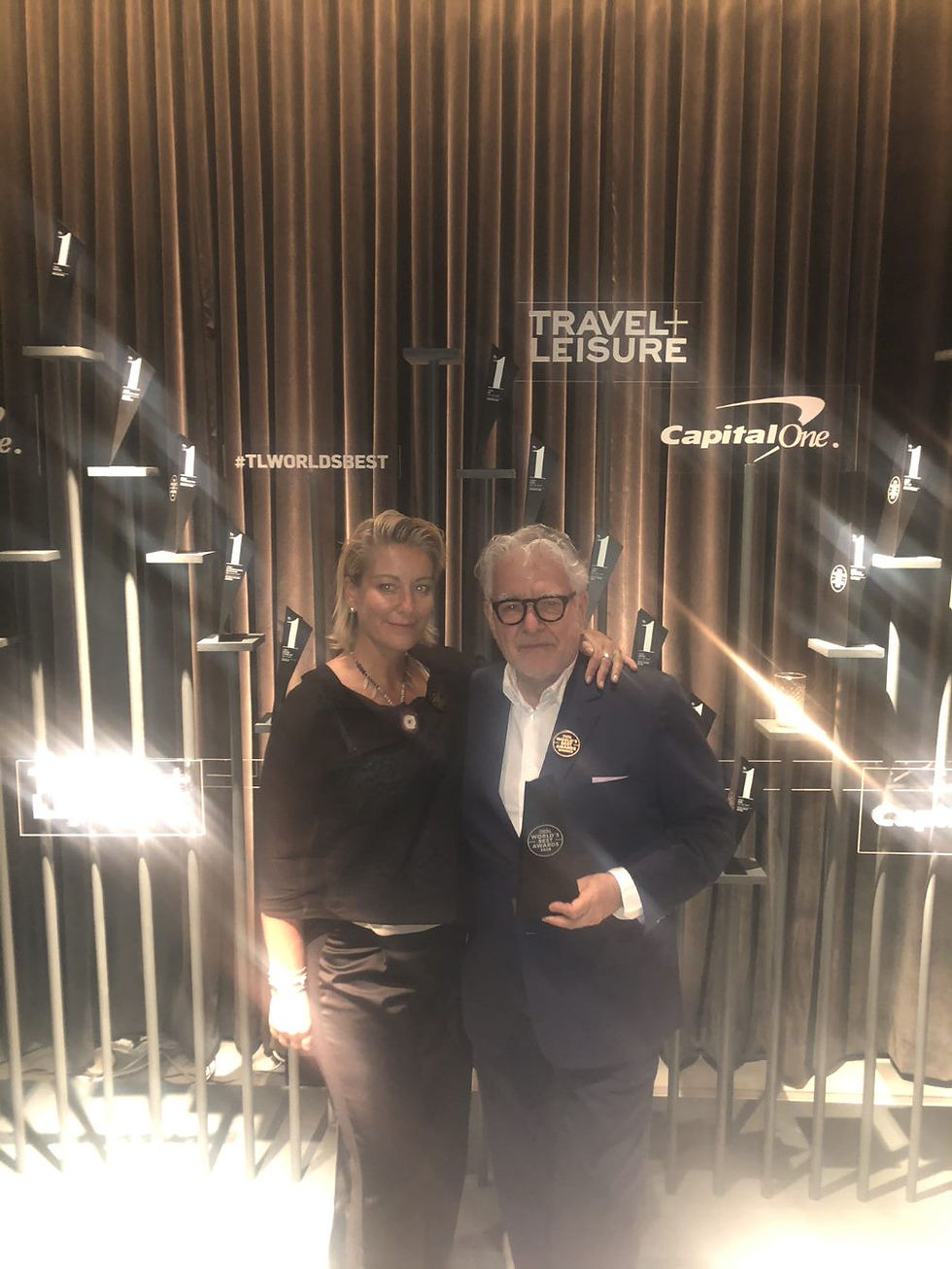
You have said wellness has to move beyond the spa. What are hotels still missing?
Sleep is the clearest example.
It is remarkable how many luxury hotels still do not have proper blackout curtains, good ventilation or thoughtful lighting. Guests are dealing with blinking lights from smoke detectors in a room that is supposed to help them rest.
Some hotels have a handful of sleep-focused rooms. Eventually, every room will need to meet that standard.
Wellness has to run through food, light, air, movement and design across the entire stay, not just the 90 minutes someone spends in the spa. You cannot call yourself a wellness hotel because you have a beautiful treatment menu while ignoring what happens during the rest of the guest's day.
How are GLP-1 medications going to reshape hotel restaurants and fitness offerings?
Hospitality has not fully responded yet, but it is coming.
A meaningful proportion of affluent guests are using these medications, and many cannot eat a traditional starter, main course and dessert. Restaurants will need to offer what is effectively a GLP-1 menu in disguise: smaller portions that are dense in protein, fiber and nutrients.
The concern is that people can lose significant lean muscle alongside fat, particularly if they are not eating enough protein or doing strength training. That matters for everyone, but it is especially important for women as they age because maintaining muscle and bone strength becomes increasingly important.
Hotels have a real role to play through intelligent food, strength-based movement and better-trained staff.
Wellness culture leans heavily on discipline and sacrifice. You have argued that is backwards. Why?
Every other industry understands pleasure.
Shopping gives you points. Social media gives you likes. Gaming gives you rewards. Wellness tells you what to give up: no wine, no phone, no dessert.
We are designed to seek pleasure, not pain, so if wellness wants to succeed, it has to be built around enjoyment rather than restriction.
Instead of telling someone what they must sacrifice to sleep well, help them create a sensory evening ritual. It might include aromatherapy oils, a face massage, a cup of tea and a real book. It becomes something they look forward to.
Even the way spas communicate needs to change. A booking confirmation usually tells you to arrive 15 minutes early and reminds you that phones are not allowed.
Why not tell someone how excited you are to welcome them and what an incredible experience is waiting for them?
People sustain the things they enjoy.
Quickfire with Anna
What does your morning look like? No phone. Straight to natural light, then five to ten minutes of stretching or yoga, a short meditation and gratitude practice.
I also eat before having coffee because I find caffeine on an empty stomach sends my stress levels soaring.
What helps you sleep? Blue-blocking glasses for the last hour or two before bed, a real book instead of a screen, and a pen and paper beside the bed. If something is worrying me, I write down the next action I can take. It helps my brain let go of it instead of ruminating all night.
A space or concept inspiring you right now? Anywhere built around disconnection. I am part of developing a hotel concept where guests hand over their phones at check-in and there is no Wi-Fi. People need somewhere that gives their brains a genuine pause from constant input.
What are you learning about right now? AI. I spend around an hour a day learning how to use it. At Wahayla, I am building AI-powered knowledge libraries around subjects such as sleep, nutrition and longevity. We use them to support research and keep track of new developments.
I also use AI for the operational side of the business, but human judgment still has to come first. If you leave too much to AI, the results are usually not very good.
Anything you would recommend right now? Stacy Sims's research on how women need to train, eat and fast differently from men. So much health and fitness advice was developed through research conducted primarily on men, and it shows.
What is the one thing you want women to understand about their bodies? Lower your cortisol, and learn to understand your heart rate variability and resting heart rate. I use them together as signals of how recovered or stressed my body may be. They help me understand whether today is a day to push or a day to recover.
Women have been taught to train, eat and fast like men. We should not.
Wear a device long enough to recognize your own patterns, then take it off and trust what your body is telling you.
The goal is not to push harder every day. It is to know when your body is ready to push, and when strength means allowing it to recover.