.png)
Margaret Haas Wolf on Brownell, Family Business and the Human Side of AI

Born into one of travel’s oldest agencies, Margaret Haas Wolf still wanted experience that had nothing to do with the family business. Recently appointed Vice President of Agency Development and a member of Brownell’s leadership team, she talks about earning her place, what she learned from a job she hated, the women who have mentored her and why AI should take over the boring stuff.
Margaret Haas Wolf has been around Brownell for almost exactly as long as she has been alive.
The luxury travel agency dates back to 1887, but the Haas family entered the picture in 1993, when Margaret’s father, Troy Haas, joined the business. Margaret was born about nine months later.
Her two older siblings went in completely different directions: her sister became a doctor and her brother works in AI and tech consulting. Margaret kept coming back to travel.
But she didn’t go straight into the family business. She spent a summer at The Goring in London, took a tech sales job in Boston that made her miserable, spent four years selling Southern Africa for Audley Travel, and was preparing to move to Botswana to work for a locally owned safari company when COVID changed the plan.
She eventually joined Brownell in 2021, initially as a coordinator. On September 1, she became Vice President of Agency Development, with a broader role in the agency’s strategic growth and a seat on the leadership team.
We caught up with Margaret at Virtuoso Travel Week to talk about finding her own way into the family business, the reality of having opportunities other people don’t, what travel advisors risk losing to AI and the deceptively simple networking lesson she learned from her dad.

You grew up around Brownell. Did you always know you would eventually work there?
As soon as I started seriously thinking about my career, it felt pretty obvious. I worked at Brownell most summers, either with the marketing team or with an advisor, and I kept coming back to it.
Once I realized this was what I wanted to do, probably right before college, I also knew I wanted work experience elsewhere that had nothing to do with Brownell. Brownell was always the end goal, assuming it was a mutual best fit.
And you definitely got that outside experience. What did the journey look like?
In college, I spent a summer working at The Goring in London, which was really cool. I got to see some of the back-of-house operations, worked in the bar and learned how to make a really good cappuccino.
After college, I moved to Boston and took a job in tech sales. I hated it. I made great friends and the sales training was incredible, but I realized I needed to sell something I cared about.
I remember coming home for Christmas and telling my mom how miserable I was. She said, “Try to make it another six months. If you get to a year, it will be good for your résumé.”
I burst into tears and said, “You can’t make me go back.”

She said, “I can’t make you do anything. You’re an adult woman. This is your job.”
I went back to Boston, started researching travel jobs and found a position with Audley Travel. Somehow the stars aligned and they hired me. I left tech sales after six months, which technically wasn’t great for my résumé, but it worked out.
I spent four years there as a Southern Africa specialist and loved it.
You were then supposed to move to Botswana?
Yes. I was on a work trip in Botswana and met a woman who offered me a job with a safari company there. I accepted in February 2020.
So I never quite made the move.
I worked remotely for them for about a year and a half and eventually spent six weeks living and working in Botswana in 2021. It was an incredibly eye-opening time. In the U.S., vaccines were widely available, while in Botswana people were desperate for tourism to return but the local population had very limited vaccine access. Tourism is so important to the economy, yet there were huge questions around how and when to reopen.
During that period, I started questioning whether it made sense for the company to employ me as an international salesperson. They could employ people locally to do reservations and operations for what they were paying me.
At the same time, Brownell was rebuilding as travel came back. It felt like the right moment to make the move.
Working for your father’s company inevitably comes with assumptions, particularly when “nepo baby” has become part of the cultural conversation. Do you think about how people perceive you?
It’s something I think about a lot.
At the same time, I can only control so much. If people are going to feel a certain way about it, they’re going to feel that way.
What I can do is work hard, be passionate about what I do and treat people well. I’ve had opportunities that are not afforded to everyone, and I hope I can make every drop out of those opportunities worth it.
That’s what I can control.
You’re now Vice President of Agency Development. What does that mean?
My previous role focused heavily on training and development for our advisors, both people who were completely new to the industry and experienced advisors who were new to Brownell.
Now I’m in a broader, more industry-facing role and on the leadership team, so I have more involvement in the strategic side of the agency.
I’ll also work closely with our partners team. One thing we’ve learned is how valuable strong relationships at the brand level are, because that gives us the opportunity to educate and engage advisors across the agency.
But the individual relationships still matter enormously.
When an advisor gets to meet a hotelier, even over coffee, you start to see how that person moves through the world. How do they talk about their hotel? How do they treat people? How do they talk about their team?
That tells you a lot about the experience a client is likely to have in that hotel. Does the team feel empowered to make decisions? Do they enjoy what they do? Are they treated well by their leadership? It all flows from there.
You’ve also been working on AI at Brownell. Where do you think it genuinely helps advisors?
AI has been fascinating because it felt as though everybody threw all the chips in the air at once and started panicking.
I appreciate that our leadership team has been thoughtful about it. This is new to everybody. We don’t want to jump into something because it’s exciting and then discover we’ve gone too far down a niche that isn’t useful.
We brought in an AI consultant to help us understand where it makes sense internally and how we use it safely. He has also worked directly with our advisors, from people saying, “I want to use AI. Where do I start?” to people who are already advanced users.
We’ve also rebuilt Inside Brownell, our internal knowledge platform, with The Trip Boutique. We have years of information across different resources and Slack conversations, and AI makes all of that much easier to search and access.
For me, that’s where it gets interesting.
You also said something I loved: you don’t want to help advisors replace themselves with AI.
That is probably the thing I care most about as we move into this next phase.
The human part of the job is going to become even more important. The advisors who continue to be successful will still have to do the hard work of good research, thinking deeply about their clients and asking the questions that aren’t simply prompted by AI.
How do we use technology to remove friction without getting in the way of the advisor doing the work that matters?
There is a reason this is a job.
If technology removes duplicate work or human error, amazing. But I don’t want AI doing all of the research for an advisor. I don’t want advisors outsourcing the very things that make a client want to work with them.
Some of the best applications are honestly the boring stuff: accounting, matching commissions, identifying duplicates, better search and eventually much richer year-over-year business analytics.
Let AI do more of that.
Who has helped you navigate this next stage of your career?
I have the huge benefit of having a lot of mentors.
Brownell is a relatively small team and the tenure is unbelievable, so I’m surrounded primarily by excellent women who are incredibly generous with their time.
Kerry Dyer has been a big one. She’s also a great friend. We both live in Dallas, and she has taught me so much about navigating the industry, building partner relationships and walking into these rooms.
There are also people outside Brownell, agency owners and industry leaders like Shawna Huffman and Paul Largay, who are incredibly willing to engage and want the next generation to succeed.
A few years ago, David Harris came into Brownell from another family business where he helped manage a generational transition, and he has been a great help as we build up the whole next generation for Brownell.
And, of course, I’ve been steeped in my dad’s philosophy for 32 years.
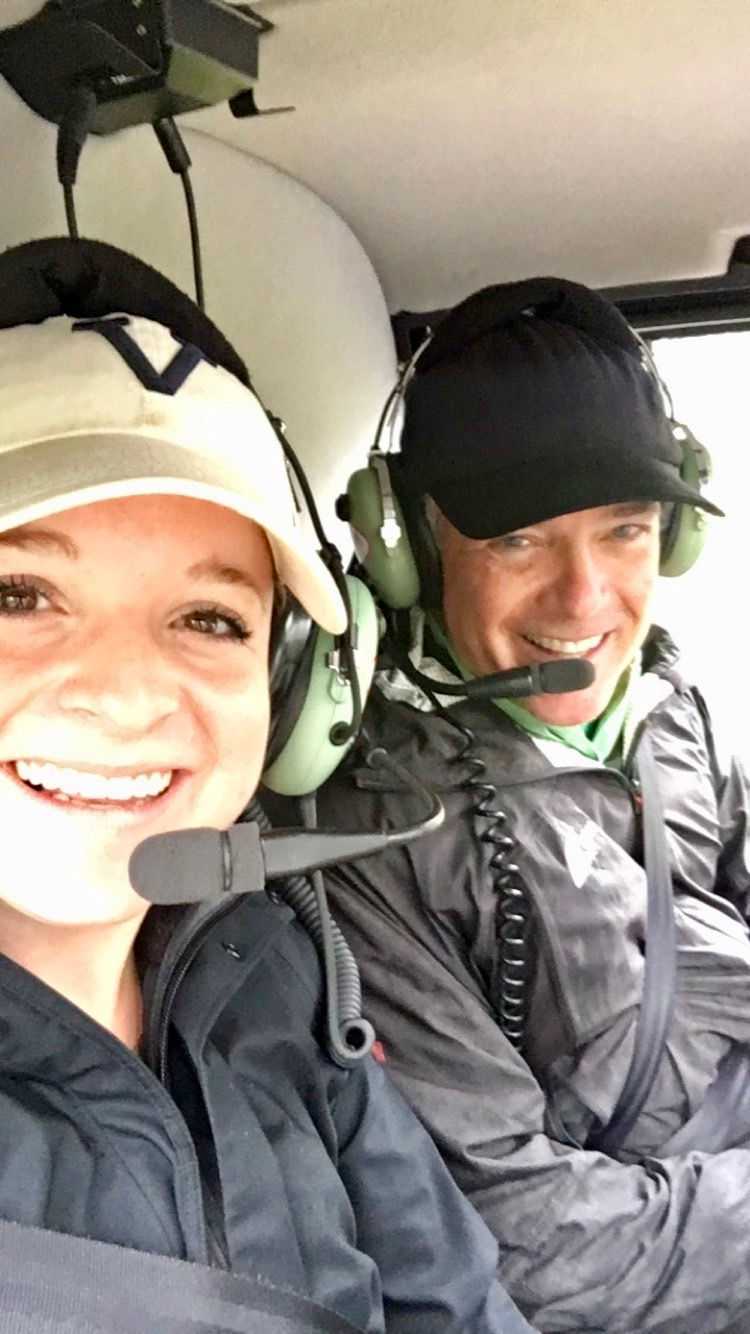
What is the best lesson you’ve learned from him?
When I first started coming to industry events, people would constantly tell me, “Your dad is amazing. I love working with your dad.”
Obviously I think he’s amazing, but I started trying to unpack what made other people feel that way.
I remember asking him how you navigate these huge parties where you barely know anyone. Walking up and introducing yourself to strangers can be exhausting.
He said, “The best thing you can do is ask people about themselves. Ask questions and listen.”
It sounds simple, but it’s a hard skill.
When people get nervous, we tend to start talking about ourselves and the things we know. He does the opposite. He cares about people. He asks good questions and he listens.
I think that’s a big reason people trust him.
Okay, rapid fire. What does your morning look like?
I get up around 6:30. My dog somehow knows the minute I’m finished pressing snooze and is immediately ready to go.
I put on exercise clothes, feed him, make myself an iced coffee and we walk the Katy Trail in Dallas. I work from home at the moment, although my husband and I are planning to move back to Birmingham in the next year.
What are you reading?
I think one of the best things you can do when you are passionate about your work is read random stuff.
There’s this temptation to keep cramming more professional knowledge into your brain, but I think you need spaces that have nothing to do with productivity or your career. It’s good to put your brain on ice and do something completely different.
I’ve been cranking through books lately. I loved The Everlasting. It was completely different from anything I’ve read and I still think about it.
The important thing for me is that reading doesn’t have to teach me something I can apply at work. Sometimes a good book gets to be a good book.


