.png)
How Carlotta Carabba Tettamanti Grew Tenuta di Murlo in Umbria and 800,000 + Followers on Instagram

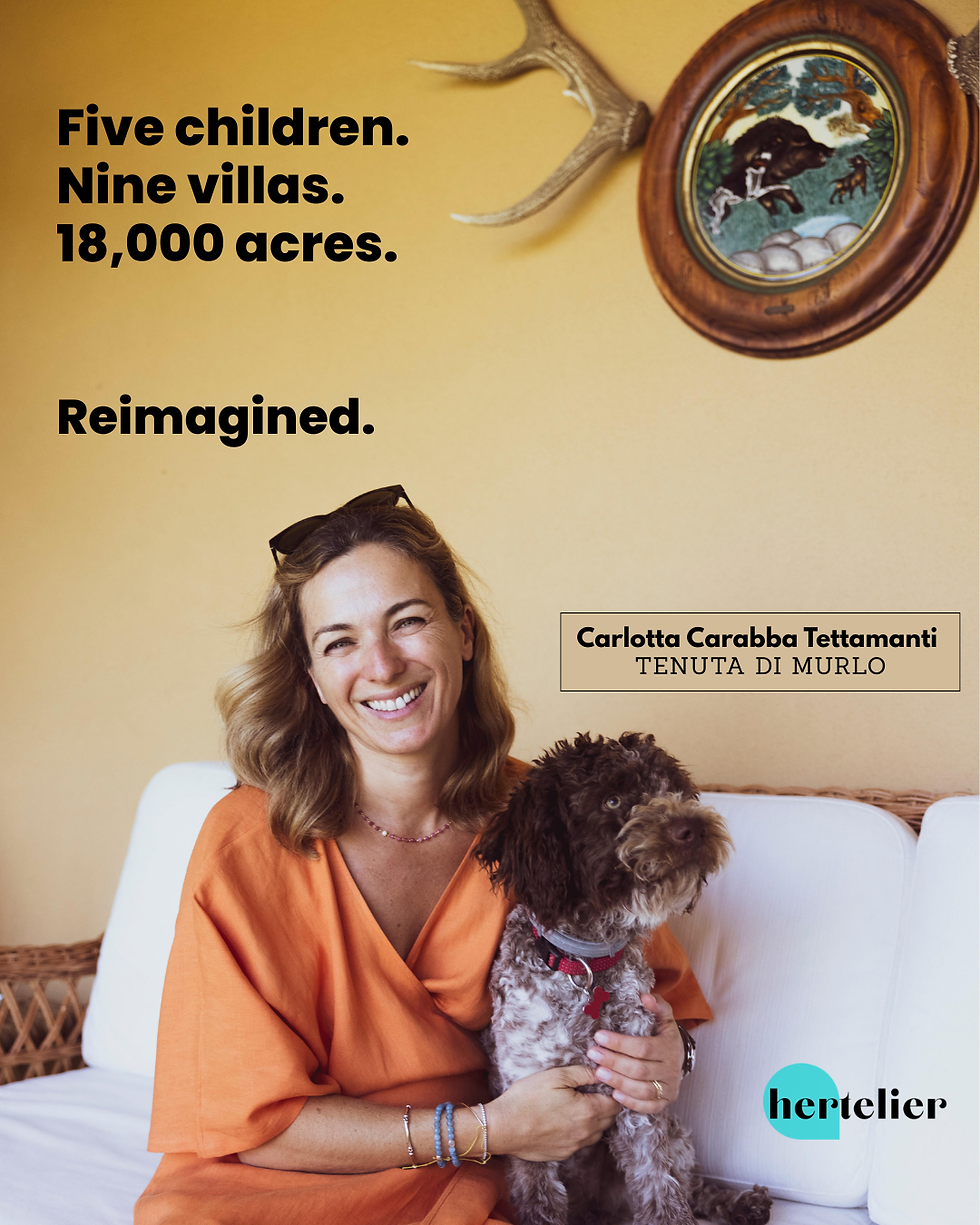
Tenuta di Murlo is not a place you stumble upon. It is an 18,000-acre Umbrian estate with Etruscan roots and more than 300 years in the Carabba Tettamanti family. When Carlotta Carabba Tettamanti married into the family, Murlo was a castle, working land, and dozens of abandoned farmhouses quietly folding back into the hills. There was no hospitality blueprint. Just land, history, and possibility.
Over the past 25 years, she and her husband have restored nine farmhouses into private villas, built a central guest hub with a restaurant and demonstration kitchen, and shaped Murlo into one of central Italy’s most distinctive luxury estates.
Then, during COVID, something shifted. While the world paused, Carlotta began posting daily from the castle kitchen and the Umbrian countryside. She shared recipes, family life, and the reality of running a vast rural estate. The account grew steadily, then dramatically. Today, Tenuta di Murlo has more than 800,000 Instagram followers, turning a once-remote estate into a global reference point for experiential Italian hospitality.
We chat about what she learned the hard way, how she balances motherhood and business, and what truly drives growth online.
You didn’t inherit a finished hotel. How did Murlo evolve into a hospitality business?
When I married my husband, Murlo was our home, the castle, and the land. The tower dates back to the 11th century. After the Second World War people left the countryside and many farmhouses were abandoned. They slowly collapsed.
We renovated one farmhouse that was in better condition and said, let’s see what happens. We rented it to friends. Word of mouth worked. Then we renovated another. And another. We never said we were building a hotel. It grew step by step.
What prepared you for hospitality?
I studied economics in Bologna, but what influenced me most was growing up as an only child with parents who loved to travel. Twice a year we took long trips, three weeks at a time, all over the world. I saw many beautiful hotels and different styles of service.
When we started Murlo, we approached it as guests. We asked ourselves, what would we like if we arrived here? That perspective shaped everything.
What were your biggest leadership lessons as the estate grew?
I learned many lessons the hard way. You have to be very precise. If you say something will happen, it must happen. And you must always put yourself in the place of the guest.
Murlo is not a typical hotel. It’s a huge private estate. Some guests imagine they can walk to the restaurant or into town. That’s not the case. Communication is everything. You need to let guests know that up front. When expectations are clear, people love the privacy and the space.

How do you and your husband divide responsibilities?
He has the vision. He draws the projects, works with the builders, and handles contracts. He is a lawyer, so he understands structure and how things must be done properly.
I manage the hospitality side. The people, the guest communication, the marketing. I like being involved in the details and meeting guests. I don’t want Murlo to grow to a size where I need a general manager. I want to stay close to the experience.
You have five children. How have you balanced motherhood with building Murlo?
It’s a balance you constantly adjust. I’m glad the business grew together with my children. When they were small, I was very present. Now the business is much bigger and more demanding. If I had a baby now, poor baby. My mind is very focused on the business.
The hardest moments were when school holidays and high season overlapped. When guests are traveling, it’s usually when your children are off school. You are on the phone solving problems and not fully present. That was difficult.

What do you hope your children learned from watching you build this?
That nothing arrives without effort. You cannot decide one day that you don’t feel like doing your job. You don’t have to be a workaholic, but you have to be consistent.
When you work hard for something over many years, it can grow into something meaningful.
Hospitality can be emotional. How do you handle difficult guests?
If it’s our mistake, we apologize and fix it immediately. Most guests understand that mistakes happen. Sometimes guests don’t want to be happy. Then there is nothing you can do. You can apologize, maybe offer a gesture, but they will not be satisfied.
A woman hotelier friend once told me that problems should stop at your chest, not go down into your heart. Otherwise you get sick. I try to remember that.
During Covid your Instagram following grew significantly. What changed?
During Covid I started posting every day. I showed life in the castle, the countryside, cooking with my daughter, what we were doing on the farm. I didn’t overthink it.
One day I dropped an egg while cooking because I forgot to make a hole. It went viral. I didn’t delete it. I left it. People like when things are real.
The place is very beautiful, and that helps. But consistency was the key. I posted every day for a long time. Now I post every other day, but I stay consistent.
I also don’t only show the villas. I show the bees, the truffle hunting, the pizza nights, the cooking classes. People want to see the life behind the place.

What practical advice would you give to other independent hoteliers building their presence online?
My top three tips:
Be consistent. If you post once a month, nothing happens.
Don’t be afraid to be visible. When people see the person behind the place, they connect more.
Don’t over-polish everything. Sometimes the imperfect moment works better than the professional photo.
Show what makes you different. For us, it’s the scale, privacy, authenticity, and that we are still a family estate.
Amazing advice. Grazie mille, Carlotta!