.png)
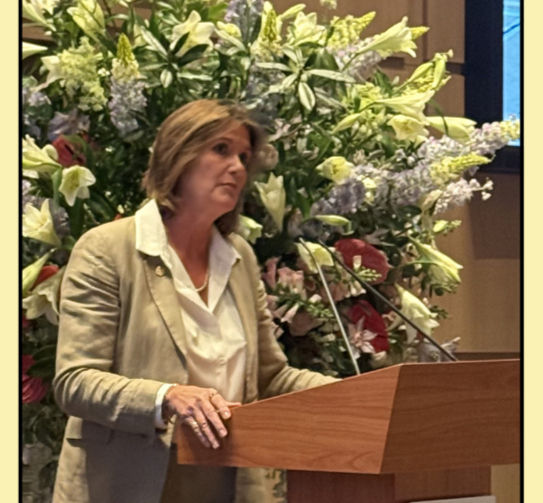
Deniz Dorbek Spent 25 Years Inside the Biggest Hotel Brands. Then She Walked Away to Build Her Own.

Deniz Dorbek did not arrive in hospitality by accident. She studied it on purpose, choosing the industry as a young woman in Turkey because she was deeply curious about the world and convinced that hotels would give her a passport to it.
Twenty-five years later, that bet has taken her across three continents and seven countries, through commercial leadership roles at Hilton, Accor, Kempinski, Hyatt and Wyndham, and most recently into operations as RVP Operations at Hyatt and CEO of a hospitality tech startup. Along the way, she met her husband while working in Jordan, moved with him from Istanbul to London to New York, and after the pandemic became a mother to her daughter Adele, now four.
At the beginning of 2026, she walked away from every corporate structure she had ever known and launched Regulus Collective, a New York–based hospitality platform built around four interconnected verticals spanning advisory, brand creation, technology and longevity. In this Herstory, Deniz reflects on the moves that shaped her, becoming a mother after the pandemic, what she wishes more women in the industry would do, and why, six months in, founding her own company has been the hardest and best thing she has ever done.

You studied hospitality management. Was this always a conscious choice for you?
It really was. I was deeply curious about the world, different cultures, different human dynamics, and travel fascinated me long before it became my profession. I thought hospitality education would give me access to it.
Right after college, I started at the front desk of a Hilton in Istanbul, and those first years were incredibly formative. A hotel lobby is one of the most fascinating social environments you can work in. You learn very quickly how to read people, the energy, the emotion, the expectations.
You went on to work across seven countries and three continents. How intentional was that journey?
I didn't handpick all seven countries, but I made myself available when the right opportunities came. I always approached my career with a lot of planning, setting goals in advance and deliberately moving across different functions, hotel types and geographies, because I wanted to understand the business holistically. I never liked silo thinking.
The first ten years I worked mostly in city hotels. Once I had built enough urban experience, I intentionally moved into resorts, then cluster and area roles, then regional leadership. Asian hospitality is totally different from Middle Eastern hospitality, and European hospitality is different from the US. I wanted to understand how markets react, how guests react, and how we react inside them.
Revenue management became a real turning point for you. What drew you in?
When I transitioned into revenue management in the early 2000s, the discipline was still very new in hospitality. Honestly, I became obsessed. I loved the mix of psychology, analytics, pricing behaviour and market dynamics. I realised very early that revenue management was not just about numbers. It is really about behaviour, patterns and decision-making.

Was there always a clear ambition driving the next move?
The goal kept shifting every three to five years. First I wanted to be a GM. Then revenue management changed my direction, and I wanted to be a director, then run a region, then a bigger region, then a VP of revenue management at a reputable brand by 40. It came a little earlier, at 38, at Wyndham. I genuinely believe in manifesting.
After that, going deep into operations was very intentional. By nature, I am a very curious person, and I wanted to blend all those disciplines together.
You spent four years as RVP Operations at Hyatt. What did that chapter teach you?
After the pandemic, many of us realised how critical operations truly are. I consciously wanted to deepen my operational exposure and understand the owner and investor side more closely.
Every market, every owner, every hotel had completely different needs. It allowed me to better understand both sides of the table, the operational realities and the commercial ambition, and how you take a great commercial idea and actually execute it inside a hotel. It also let me see clearly the silos that often exist between disciplines.
Where does your ambition come from?
I am a very passionate person, so I give 100% to anything I am doing in life. It is the same for friendship, for being a parent, and it is definitely applicable to my profession.
I truly believe we are in a great industry, a human industry. It is not rocket science, and we can do it better, just with better intention and by putting a lot of passion and heart into what we are doing.
You met your husband while working in Jordan, and you became a mother after the pandemic. How did that shift happen?
It was a little out of the blue. Before the pandemic, I honestly had not even had the chance to think about being a mother. I was so busy working and moving.
My husband and I met in Jordan, lived there together, then moved to Istanbul, then London. We were having a wonderful life in London when the global opportunity at Wyndham came through, and we moved to the US in 2018. We started everything from scratch, and it was a big culture shock. Shortly after, the pandemic hit, and we started to see the world differently. It felt like a natural path to start our family.
I never thought I would live in one country for more than four years. This is our eighth year in the US. It has become our second home, and Adele was born into it.
What was the realisation that led you to start Regulus Collective?
I started thinking about my own business seven or eight years ago, but what inspired Regulus was a simple realisation: there wasn't enough real creativity in the industry. I kept asking myself, if there were no structural limitations and no pressure to follow trends, what would I actually want to create for hospitality? That question changed everything, and the answer had to be collective by nature.
After more than two decades in the industry, one of the biggest problems I observed was how siloed and disconnected everything had become. Marketing doesn't fully understand operations. Technology teams don't fully understand guest psychology. Commercial teams don't always understand the realities at property level. I wanted to build something holistic across advisory, brand, technology and longevity, intellectually curious and globally minded, but still authentic to the emotional foundations of hospitality.
The first concrete expression of that is a new brand we are developing now, inspired by biohacking and longevity principles. A deeply human experience in the AI era, tech-driven but with the technology kept invisible. It started as a lifestyle product and has evolved into luxury, and unlike most wellness concepts it will be urban rather than a resort. We are aiming to launch the proof of concept in New York, Los Angeles or Miami within 24 months, with London likely to follow.
Six months in, how are you finding life as a founder?
It is the best thing ever to happen to me, honestly. And it is the hardest.
I have at least ten partners across the verticals, people I have worked with in the past or admired across different industries. I always wanted to be part of a tribe. I was looking for my tribe in the industry, and now I have the opportunity to build one. Everyone is like-minded, very smart, and we just want to make the world a better place. With that, the rest is easier.
What advice would you give women considering entrepreneurship?
Become an authentic leader. Just be yourself, set your goal, and stay relevant. Hospitality is evolving rapidly, and intellectual curiosity is no longer optional. It is essential.
Identify a few leaders you genuinely admire and follow their work closely. Dedicate time consistently to learning. Even 30 minutes to an hour a day compounds enormously over time.
Invest in visibility and exposure. Attend industry events regularly, even if it means budgeting carefully for them. Those rooms really matter.
And do not limit yourself to hospitality knowledge. Read across industries, follow design, technology, fashion, psychology, wellness, behavioural trends. Some of the best ideas come from outside your immediate field. Over time, that builds something much more valuable than a title: your own perspective, your own methodology, and your own voice. That originality becomes a real differentiator.
How do you set boundaries between your business and your family?
That is the hardest part, and I still need more mentorship on it. Sometimes I find myself working 12 hours in a row without a single break.
I try to take one weekend day, or half a day, just for myself, doing things like going to a museum or watching an old movie from the 60s. The other half is always with Adele. Playing with her, tuned fully to her frequency, helps me so much. I try to be with her 100%, without any disruption. I love Broadway, and now that she is four I can finally take her to little theatre shows.
What are you reading and listening to right now?
I am really into Will Guidara's new book, Unreasonable Hospitality: The Field Guide. The first one was incredibly inspirational, and the second is more of a field guide on how to take those best practices and put them into action. I just got my copy about a week ago.
I also listen to a lot of industry podcasts and read newsletters from Skift and many others. I love yours too. I subscribed a long time ago and it inspires me a lot. I try to fit in at least an hour of reading or listening a day, sometimes during breakfast, sometimes before sleep.