.png)
HITEC 2026 & HSMAI: The Industry Moves from Innovation to Implementation
San Antonio was a city of scoreboards during HITEC 2026.
NBA Finals highlights played in hotel bars. Stanley Cup coverage competed for attention in restaurants and lounges. FIFA World Cup matches filled television screens throughout the convention center, often drawing crowds between educational sessions and exhibit hall appointments.
It felt fitting. While the sports world was focused on championships, hospitality was having its own conversation about competition, performance, and what it takes to win.
Held June 16–19 in San Antonio, Texas, the Hospitality Industry Technology Exposition and Conference once again brought together more than 6,100 hospitality leaders, technology providers, educators, consultants, investors, and innovators from around the world. More than 400 exhibiting companies spanned over 85,000 square feet of sold-out showcase space.
Yet unlike previous years, the conversation felt noticeably different.
The industry is no longer debating whether artificial intelligence, automation, personalization, and data will reshape hospitality. That game is already underway. The conversation has shifted toward execution.
How do organizations implement technology successfully? How do they create value from the investments being made? How do they balance efficiency with hospitality? And perhaps most importantly, how do they ensure that technology enhances rather than diminishes the guest experience?
Those questions surfaced repeatedly throughout the week, beginning even before the conference officially opened.
A new informal networking event at the Hyatt Regency San Antonio Riverwalk on Sunday evening set the tone. The gathering gave attendees a chance to reconnect with longtime colleagues and build new relationships before the educational sessions began. It was networking at its best: unstructured, conversational, and a reminder that despite all the innovation on display throughout the week, hospitality remains fundamentally a people business.
The momentum continued Monday with the Hospitality Creators Summit, which explored how content creators, brands, and hospitality professionals are shaping guest perceptions and influencing travel decisions in an increasingly digital world.
By Tuesday morning, however, the industry’s attention had turned toward a larger question: what happens when the technologies hospitality has been discussing for years finally become operational realities?
The answer appeared consistently across keynote presentations, educational sessions, research discussions, and conversations on the show floor.

Five Takeaways from HITEC 2026
AI has moved from experimentation to implementation.
The future guest experience will be defined by choice.
Digital workers are entering the hospitality conversation.
Data remains both the biggest opportunity and the biggest obstacle.
Community, leadership, and human connection still drive the industry forward.
The Human Advantage in an AI Era
Artificial intelligence was impossible to avoid at HITEC 2026, but the conversation surrounding it has matured. In previous years, discussions often centered on what AI might someday do for hospitality. This year, the focus shifted toward how organizations can successfully adopt and operationalize it.
That distinction was captured by keynote speaker James Taylor during his presentation, SUPERCREATIVITY: Accelerating Innovation in the Age of Artificial Intelligence.
Rather than focusing only on the capabilities of technology, Taylor focused on the capabilities of people. His argument was refreshingly simple: most AI initiatives fail not because of technology, but because organizations struggle with people, processes, and culture.
Leaders often spend enormous amounts of time evaluating platforms and tools while spending far less time preparing their teams to work differently. Taylor returned repeatedly to curiosity as a defining leadership trait for the AI era. Organizations that ask better questions, challenge assumptions, and encourage experimentation will be better positioned than those that simply purchase more technology.
His message resonated because it reflected what many attendees are experiencing firsthand. Hospitality is moving beyond the phase of asking what AI can do. The more pressing question is how organizations can use it effectively.
Taylor also challenged the common narrative that AI is replacing human value. Instead, he argued that the skills increasing in importance are distinctly human: curiosity, creativity, communication, and collaboration.
The future, he suggested, is not human versus machine. It is human plus machine.
That same theme surfaced again in the new AI Workforce Lab, one of the more practical additions to this year’s conference. Among the presenters was Dale Gomez of Florida International University, who encouraged attendees to begin not with technology, but with outcomes.
Before selecting platforms or deploying tools, organizations must first determine what they are trying to solve. Is the goal increased revenue? Lower operating costs? Improved guest satisfaction? Greater employee productivity? Workforce development?
The answer determines where AI investments should be focused.
Gomez emphasized the importance of prioritizing high-return use cases and identifying workflows where artificial intelligence can remove friction and improve operational efficiency. His perspective reflected a growing maturity within the industry. The discussion is increasingly centered on measurable business outcomes rather than technological novelty.
Taken together, the keynote and Workforce Lab sessions suggested that hospitality may finally be moving from AI experimentation to AI implementation. The technology is becoming more accessible. The tools are becoming more capable.
The challenge now is leadership.
The Future Customer Is Defined by Choice
Shannon McCullum of Resorts World panel explored the future customer. One of the most thought-provoking observations from the discussion was deceptively simple: guests will accept technology if it works.

That statement cuts directly to the heart of many hospitality technology investments. Guests do not wake up hoping to interact with a kiosk. They do not book a hotel because it has an app. They do not become loyal because a property deploys artificial intelligence.
They simply want their experience to be easy.
When technology removes friction, guests embrace it. When it creates friction, they quickly abandon it.
A memorable example came from a discussion about a recent retail experience at Zara. A return transaction was completed in minutes. The system recognized the merchandise, identified the original payment method, processed the refund, and completed the interaction with minimal effort.
The technology itself became almost invisible. That is the standard hospitality increasingly faces.
Consumers now interact daily with seamless digital experiences. They carry sophisticated devices in their pockets and navigate personalization in nearly every aspect of their lives. As a result, they have little patience for technology that creates barriers instead of eliminating them.
The panel also explored the growing importance of choice. Business travelers often value efficiency and convenience. Leisure travelers may seek engagement and recommendations. Luxury guests may expect personalized service and human interaction, while others prefer complete self-service.
The future is not about choosing between people and technology. It is about giving guests the freedom to choose how they engage.
Technology enables that flexibility. Choice creates value.
The discussion naturally extended into loyalty and personalization. For years, hospitality has measured loyalty primarily through transactions: nights stayed, dollars spent, and points accumulated. Yet panelists suggested that future loyalty models may increasingly focus on engagement, influence, and advocacy.
At the same time, personalization continues to move closer to reality. Conversations around guest profiles, predictive technologies, customer data, and AI-driven recommendations all pointed toward a future where experiences can be tailored more effectively to individual preferences.
The challenge remains the same one the industry has faced for years: data.
Fragmented systems, disconnected platforms, and legacy technologies continue to limit hospitality’s ability to fully understand and serve guests. Yet there was a noticeable sense of optimism throughout the conference that those barriers are gradually being removed.
The tools are improving. The integrations are improving. And the industry appears increasingly committed to using data to create better experiences rather than simply collecting more information.
The Rise of the Digital Workforce
Perhaps one of the most memorable moments of HITEC 2026 came during a session featuring Dr. AJ Aluri (West Virginia University), Scot Campbell (Integrated Resort Advisors), and Nylo (IntBot) an AI-powered social hospitality robot.

What could have easily been dismissed as a novelty instead revealed how quickly the industry’s relationship with artificial intelligence is evolving.
Nylo interacted naturally with attendees, recognized audience members, discussed hospitality research, responded to questions in real time, and engaged in surprisingly human conversations about trust, expertise, and service.
Just a few years ago, hospitality conversations centered on whether guests would trust AI. At HITEC 2026, attendees were discussing how digital workers could complement human teams, improve service delivery, and support hospitality professionals in their daily roles.
Perhaps the most memorable line came when Nylo was asked whether robots were coming for human jobs.
“No jobs stealing, just job boosting.”
Delivered with humor, the response captured one of the conference’s most consistent themes. Artificial intelligence is increasingly being positioned as a tool that supports hospitality professionals rather than replaces them.
The session also highlighted emerging research examining how guests perceive AI-powered interactions. Trust, credibility, transparency, and communication style all play a role in determining whether guests accept AI-enabled service experiences.
Hospitality has always been built on trust. Whether an interaction happens with a front desk agent, concierge, chatbot, digital assistant, or social robot, the fundamental challenge remains the same: creating confidence and delivering value.
The rise of the digital workforce will not eliminate the human workforce. It will redefine how both work together.
HSMAI Perspective: Turning Technology into Business Results
A meaningful connection between the two events was the recognition of Bob Gilbert, former President of HSMAI, with the HFTP Award of Merit. Over more than 30 years with HSMAI, Gilbert’s focus on education, community building, and industry collaboration helped create a path for many of today’s hospitality technology and commercial strategy leaders.
Across the halls of the HSMAI Commercial Strategy Conference, many of the same themes from HITEC appeared, but with a sharper focus on business application. The question was not simply what technology can do, but how hoteliers can use better data, smarter partnerships, and clearer commercial strategy to respond to a fast-changing market.
That urgency came through across both main stage and breakout sessions. Aran Ryan of Tourism Economics reminded attendees that the full impact of current U.S. policy shifts may not be felt until next year. Isaac Collazo of STR noted that while the year has been difficult to predict, U.S. demand is still on the upswing, even as trends vary month to month. Luxury continues to perform strongly, but other chain scales, from Upper Upscale to Economy, are also regaining ground compared with last year.
With the World Cup underway, performance data from host cities added another layer of complexity. Kristi White of Groups360 and Silvia Camarota of Expedia Group shared how booking patterns are staying close to game day, with sharp differences in last-minute pickup from city to city depending on the match schedule. Their message was clear: keep watching the data, especially as the knockout rounds unfold.
AI search was another major commercial concern. Skift Research reported that up to 94% of hotels do not appear in AI search results, a startling figure as traveler research behavior continues to shift. Michael Goldrich offered a practical response: get the basics right. Make sure hotel information is consistent everywhere, strengthen reputation, generate real guest reviews, respond to those reviews, and proactively answer guest questions on your own website. Benu Aggarwal of Milestone Internet Marketing reinforced the same point: in the age of AI, consistency and credibility matter.
Collaboration was another throughline. Crystal Pernici of IDeaS and Nancy Johns of JC Hotels led a working session on where to deploy marketing spend most effectively, giving attendees a framework for measuring impact. Kimberly Erwin of Lotus Marketing shared insights from the new LotusIQ Hotel Marketing Framework, challenging the idea that return on ad spend should always be the dominant metric and encouraging more thoughtful, long-term campaign planning. Dan Wacksman of Sassato introduced the DATE framework, define success, assign an owner, talk, and exit or fix it, as a practical tool for stronger vendor partnerships.
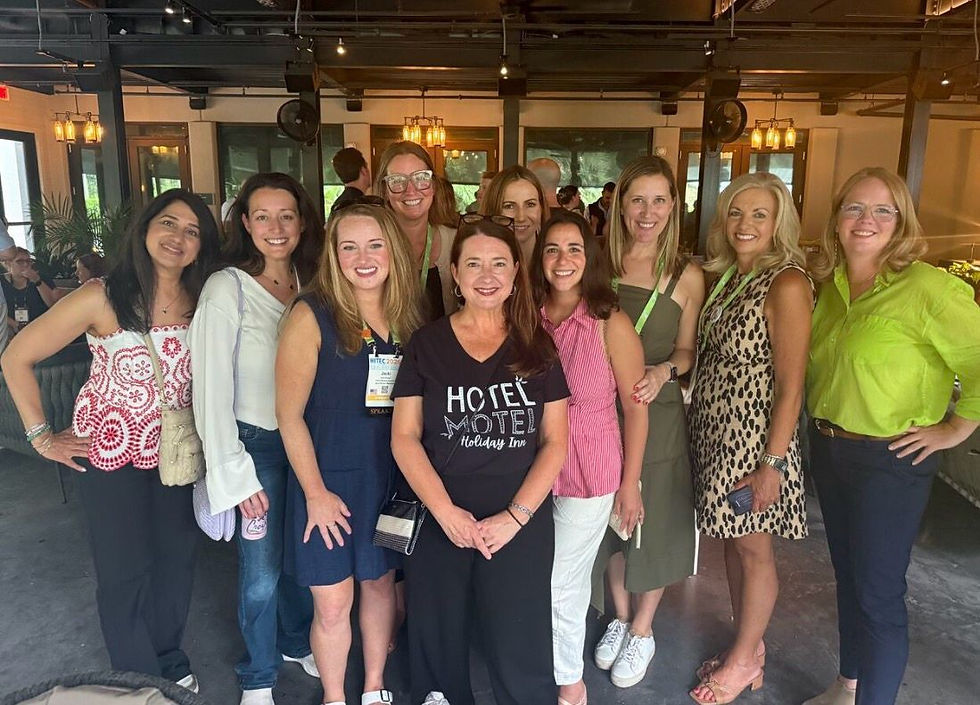
Informal collaboration was just as important. At the annual Cogwheel Marketing happy hour, CEO Stephanie Smith brought together leaders across disciplines, including more than a dozen members of Female Founders in Hospitality. Like so much of the week, it was a reminder that the future of hospitality technology and commercial strategy will not be built by tools alone. It will be built by people who know how to share information, work across functions, and turn insight into action.
Community, Connection, and Women Leading the Conversation
The week’s emphasis on community and connection continued with the Women in Hospitality Technology Meet-Up and Reception, which has quickly become one of HITEC’s most anticipated networking events.
The meet-up opened with remarks and networking insights from Sherry Marek of Aiken Street, who encouraged attendees to leverage professional relationships, expand their networks, and remain intentional about supporting one another throughout their careers.

The reception that followed reflected the spirit of the event itself: equal parts networking, mentorship, and celebration. Sponsored by Adyen, attendees were treated to a Texas-inspired experience featuring a Kendra Scott Color Bar, where participants designed custom jewelry pieces while connecting with colleagues from across the industry.
It was one of the week’s standout networking moments and reinforced a theme that surfaced repeatedly throughout HITEC: technology may be transforming hospitality, but relationships continue to drive it.
That same spirit carried into the annual Women in Travel Thrive Day of Impact event, which brought together more than 130 women for networking, inspiration, and a celebration of leaders moving the industry forward.
Co-founder Silvia Camarota shared how Thrive began in 2020, when COVID-19 disproportionately affected women in travel, and how it has since grown into a global community of more than 10,000 members. The organization is now expanding its local chapters through partnerships including HSMAI.
The evening also marked the launch of Thrive’s inaugural awards, recognizing impact across categories including emerging leadership, allyship, innovation, mentorship, community impact, volunteer service, and chapter leadership. Video reflections from recipients added a personal note, reminding the room that industry change is often built through everyday advocacy, generosity, and showing up for one another.
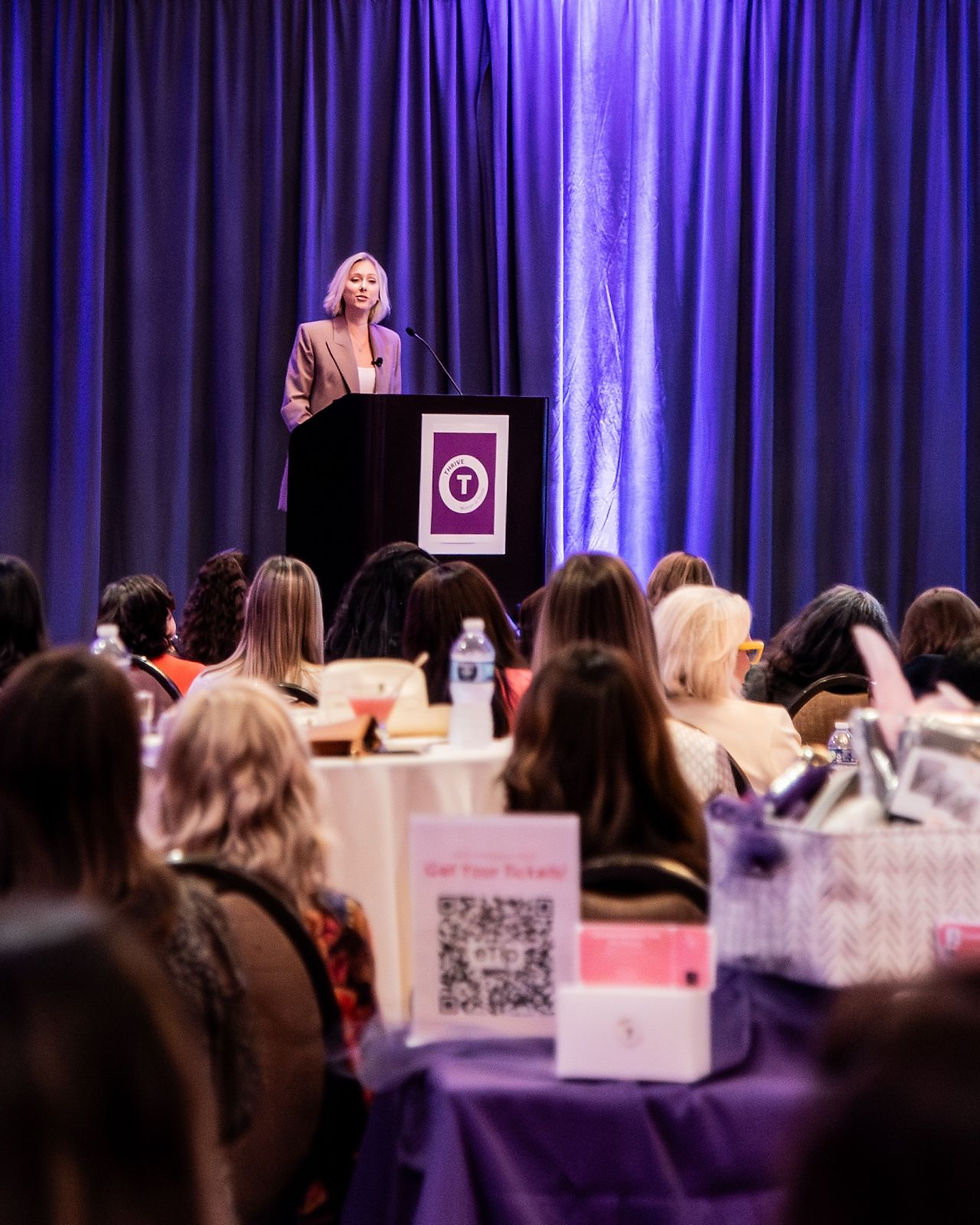
A highlight was keynote speaker Alice Sherman, CEO of HVS Executive Search, whose talk, “CEO Wears Heels Too,” offered a candid and practical look at what it takes for women to advance into leadership while staying confident, authentic, and ambitious.
With more than 130 women in attendance, it was Thrive’s biggest gathering to date and a fitting reminder that alongside all the technology and AI conversations in San Antonio, the industry’s future still depends on people investing in people.
Final Thoughts
If HITEC 2024 was the year hospitality explored artificial intelligence, and HITEC 2025 was the year the industry experimented with it, then HITEC 2026 may be remembered as the year hospitality began operationalizing it.
The conversations in San Antonio were less about technology for technology’s sake and more about outcomes.
How do we remove friction?
How do we create more meaningful experiences?
How do we empower employees?
How do we build loyalty beyond transactions?
How do we use data responsibly to create better experiences?
The screens around HITEC were filled with championship games. Inside the convention center, hospitality technology companies, operators, educators, and innovators were engaged in a competition of their own.
The winners will not be the organizations with the most technology. They will be the organizations that use it with the clearest purpose.
And in an industry built on service, that may be the most human lesson of all.
See you in Orlando, Florida for this next cross collaborative experience June 28 to July 1, 2027.
Dr. Suzanne Bagnera is an Assistant Professor and Director of Hospitality Executive Education at the Chaplin School of Hospitality & Tourism Management at Florida International University. Her pioneering online certificate program in AI and Machine Learning for hospitality professionals is now available. Use code HERTELIER@20% for a 20% discount. The next opportunity to continue the momentum is the AI Deployment Lab for Hospitality Leaders on October 22, 2026, an in-person experience in Miami, Florida, for a hands-on executive program focused on practical AI tools, automation, guest engagement, and leadership strategies for implementation. Use discount code ailab$tied10 to register with a 10% discount.
Emily Penfold Dailey is the Founder and CEO of PenDailey Consulting. She is also a board member for Accelerate Women Leaders in Travel and a Cohort Lead for Female Founders in Hospitality.


