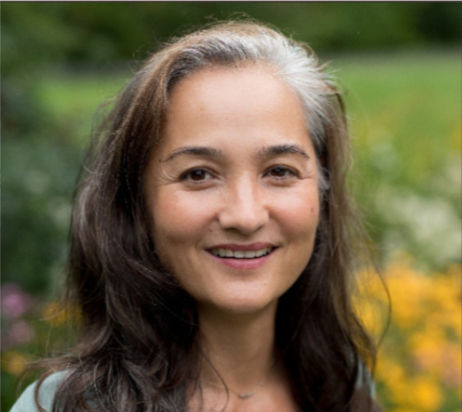
From “What’s a Spa Director?” to Nearly $11 Million: Tammy Pahel on Making Wellness Pay

The Carillon Miami Wellness Resort executive on turning spa into a profit center, why 60% of her revenue comes from locals, growing talent from within and why women are finally demanding better answers about their health.
When Tammy Pahel arrived at Carillon Miami Wellness Resort in May 2018, its sprawling wellness operation had plenty going for it: a 70,000-square-foot facility, fitness programming, a spa and a health and wellness component. What it didn’t have was a particularly healthy P&L.
“We were losing about $48,000,” Pahel recalls. Revenue was a little over $2 million. Today, she says the operation generates approximately $11 million in revenue at a 68% profit.
That transformation tells you a lot about the way Pahel approaches wellness. She may oversee treatments, fitness, medical partners, technology and experiences designed to help people sleep, recover and live better, but she thinks like a business operator. “We are a business,” she says. “It’s not an easy business. You have to learn it. You have to learn how to make money and make it profitable.”
It’s a lesson Pahel has been learning for nearly four decades.

From Retail to Running the Spa
Pahel didn’t set out to build a career in wellness. After graduating from Penn State, she joined Nemacolin Woodlands Resort in Pennsylvania in 1989, working in the spa boutique and overseeing retail across the property. She turned the retail operation around financially, and the owners approached her with an unexpected proposition: Would she like to become spa director?
Her response: “What’s a spa director?”
There were only a small number of destination spas in the United States at the time, and the industry looked very different. “It really was a fat farm,” Pahel says of the typical spa experience of the era. “That’s where women came to get beautified, maybe lose some weight, firm up, tighten things up.”
Even the word spa needed explaining. In the early 1990s, she recalls, the newly formed International Spa Association was working to create a definition for the industry because many consumers still associated a spa with a hot tub.
By 1996, Nemacolin’s spa had established a track record of strong profitability, and Pahel had begun to see something other hotel operators had not. “If managed correctly, it wouldn’t be an amenity any longer,” she says. “We were making like 50% profit. And so I knew that the industry was going to explode.”
She left Nemacolin after seven and a half years specifically to learn how to build spa businesses from scratch, going on to roles at properties including Arizona Biltmore, Caesars Palace and Turnberry in Florida. Along the way, she kept pushing the definition of what a spa could be. By 2008, she was incorporating integrative and functional medicine into a project in South Carolina, at a time when many people had little idea what those terms meant.
She credits independent ownership with giving her room to experiment. “I’ve always had that opportunity to really grow what a spa could be,” she says. There was one important condition: “As long as you’re making the money, they’re happy.”
The Carillon Model: Don’t Try to Do Everything Yourself
That philosophy is easy to see at Carillon. One of the smartest pieces of Pahel’s business model is that she hasn’t attempted to build every capability internally. Instead, Carillon partners with specialists who bring expertise the hotel could never reasonably replicate.
The biostation, for example, provides integrative and functional medicine under cardiologist Dr. Martin Bloom. Pahel then works with the medical team to translate that expertise into programming that works within a resort environment, including multi-day programs around perimenopause and menopause, weight management and detoxification. Other partners bring disciplines ranging from energy healing and hypnotherapy to medical aesthetics.
“They’re experts,” Pahel says. “They have certified people providing services that we could never provide.”
Some of those operators lease space from Carillon. Pahel says roughly 5,000 to 5,500 square feet of leased wellness space generates approximately $500,000, while simultaneously giving the resort access to practitioners who can be incorporated into packages and retreats.
It is a deceptively simple model: bring in outside expertise, monetize the real estate and create additional programming for the guest.
The Local Guest May Be the Biggest Opportunity
Perhaps the most eye-opening number in Pahel’s business is not the near $11 million. It’s 60%, the share of spa and wellness-technology revenue she says comes from the local community.
Carillon regularly hosts events designed to introduce Miami residents to what is available inside its vast wellness operation. For World Wellness Weekend, for example, its partners offer complimentary experiences so visitors can sample different approaches and technologies.
The strategy gives Carillon a customer base that isn’t tied to hotel occupancy. It also recognizes a basic truth about wellness: people increasingly want it as part of their regular lives, not simply as something they do on holiday.
And those customers don’t all want the same thing. “It’s not one size fits all,” Pahel says. One person may want extensive blood work and functional medicine. Another may prefer acupuncture. Someone else may simply want help recovering from stress or sleeping better. Offering multiple entry points is part of the commercial strategy.

Wellness Doesn't Have to Cost Millions
Pahel is quick to point out that other hotels shouldn’t try to replicate Carillon. “Nobody's going to sit on $1.5 million worth of technology,” she says.
In fact, Carillon actively invites hotel executives and spa directors to come in, experience its equipment and learn from what has worked. Feel free to call her!
Her bigger message is that a hotel doesn’t need anything close to Carillon’s scale to offer meaningful wellness. Start with the guest journey: a refreshing aromatherapy towel at arrival, a yoga mat in the room, guided meditation or breathwork available through the television, better sleep, healthier food that actually tastes good, or a local yoga instructor leading a class on the lawn.
If your hotel is surrounded by woods, she says, take guests forest bathing. “It costs nothing.”
Even when hotels do have capital to spend, Pahel applies a strict commercial lens. Her rule of thumb is that equipment costing $50,000 or less should be able to pay for itself within a year. But simply buying something isn’t enough. “You have to market it.”
At Carillon, silent video screens show guests the wellness experiences available to them. People see something unfamiliar, become curious and ask to try it. The spa has effectively become its own showroom.

Wellness Has Left the Spa
That may be Pahel’s biggest message for hotel operators: stop thinking of wellness as a department. At Carillon it stretches into food and beverage, guestrooms, fitness, sleep and the arrival experience.
Its chef works with local farmers and designs dishes around seasonal produce. Mocktails sit alongside wine at the bar. Guestrooms include yoga mats and access to meditation, breathwork and yoga content. Carillon has experimented with AI-enabled beds designed to adapt to a sleeper’s body and is exploring ways to connect sleep with circadian lighting.
Some of these are meaningful investments. Others cost almost nothing. Pahel cites research discussed during a Forbes Travel Guide panel suggesting that a large majority of travelers are now looking for something that contributes to their wellbeing. Her conclusion for hotels is straightforward: if guests are already asking for it, operators need to start building it into the experience.
Leading by Example
Pahel brings much the same pragmatism to leadership. She arrives at work around 6:30 in the morning and says that in eight years at Carillon she has not called in sick.
“I think we have to lead by example,” she says. “I come to work, I do my job, I have passion.”
But her more interesting leadership philosophy may be what happens to the people who come in behind her. Carillon’s wellness operation employs around 100 people, and because there are relatively few facilities like it, Pahel says the team often develops talent internally rather than simply hiring experienced people from elsewhere.
Locker-room attendants have moved into wellness-concierge positions and then into supervisory roles. “We take and try to work with people who start with us and grow with us,” she says.
For Pahel, passion matters, but so does showing people a route forward. “If you're willing to come in and you're a locker-room attendant and you want to grow in this industry and you have that passion, we're here to help you get where you want to go.”
She also credits difficult periods in hospitality with shaping the way she leads. Pahel was operating in the industry through 9/11, the financial downturn and COVID, and says each crisis forced her to rethink how she was doing business.
“I think experiences, whether good or bad, at the end of the day, I learned something from it,” she says.
That ability to reimagine the business has become part of her operating philosophy. When circumstances change, the answer isn’t simply to wait for things to return to normal. It is to look at what guests need now, rethink the model and find a different way forward.
COVID was perhaps the biggest example. Beyond accelerating demand for wellness, it pushed Carillon to rethink how experiences were delivered and helped validate the touchless wellness model Pahel had already begun developing. For Pahel, resilience is less about enduring disruption than learning from it.
Why Women Are Looking for Different Answers
One of the areas where Carillon is expanding its programming is women’s health, particularly perimenopause and menopause. For Pahel, that subject is personal.
She remembers asking her own gynecologist about hormone health and being dismissed with the comment, “You’re one of those.” She was experiencing changes including weight gain despite exercising regularly and says her traditional doctors weren’t giving her satisfactory answers.
Eventually, she turned to integrative and functional medicine. “They told me that I wasn’t crazy,” she says. Blood work indicated that her estrogen, progesterone and testosterone levels were low, providing an explanation for some of what she had been experiencing.
Her experience helps explain why she believes women are increasingly turning to wellness providers looking for information they may not feel they are getting elsewhere. “When I was going through perimenopause, my mother wasn’t talking to me about it,” she says. “You didn’t know where to go.”
That silence is finally beginning to break. “Women want to talk about it now.”
Carillon has responded with programs specifically focused on perimenopause and menopause, combining medical expertise with the wider wellness environment. It’s another example of Pahel’s larger philosophy: listen to what people are struggling with and build around the need.
The Wellness Executive Who Gets Up at 3:30 A.M.
Pahel also practices much of what she preaches. She and her husband get up at 3:30 in the morning and are usually at the gym by 4. “I try to do it at least four or five times a week,” she says.
Three of those days include weights, something she considers particularly important for women as they age and lose muscle mass. Other workouts focus on cardio, mobility and balance. On Sundays, they walk along the beach.

And yes, if you are wondering what time someone who wakes at 3:30 goes to bed, Pahel says she is generally in bed by 8 and asleep by 8:30.
She cooks frequently at home, focuses on nutritious food and thinks protecting your health ultimately comes down to choices you can sustain. But when asked what advice she would give ambitious women trying to balance demanding hospitality careers with their own health, she keeps coming back to one word: passion.
Hospitality is not a 40-hour-a-week industry, she acknowledges, and her job certainly isn’t. But she loves it. “Carillon has been the best eight years of my life because it’s been fun,” she says.
Fun, in Pahel’s world, apparently means taking a wellness operation from a loss to $11 million in revenue, finding new business models, experimenting with new ideas and helping other hotel operators figure out how to do the same. “I truly love sharing with people the success Carillon has had financially.”
From Margaritas to Longevity
Pahel has lived through 9/11, financial downturns and COVID during a hospitality career spanning nearly four decades. Each crisis, she says, forced her to rethink the business, but COVID was particularly transformative for wellness.
Before the pandemic, even at a wellness resort, our collective definition of wellness could be fairly loose. “When I got here, we were always a wellness resort,” Pahel says. “But in 2018, laying on the beach in the sun, drinking 10 margaritas was wellness.”
She laughs. “It wasn't wellness.”
The pandemic changed that mindset. People became more conscious of their immune systems, stress, sleep, movement and long-term health. Today, Pahel is looking toward areas including brain health, recovery and ways to help people maintain their physical and cognitive health as they age.
But the central lesson of her career is arguably much simpler: wellness has gone from a hotel amenity to a serious business. Pahel saw that coming in 1996. The rest of the industry is finally catching up.