.png)
Seven Signals from the Forbes Travel Guide Summit: Where Luxury Hospitality Is Headed Next

Updated: Mar 2
When you close down the Hôtel de Paris Monte-Carlo, you are not hosting a conference. You are sending a signal.
Opened in 1864, Monaco’s Belle Époque palace overlooking Place du Casino — and recently restored to its full grandeur — the takeover of the Hôtel de Paris, something virtually unheard of, set the tone immediately. This three-day, invitation-only gathering brings together more than 800 decision-makers from the world’s leading hotels, travel advisors, brands and luxury innovators, representing 65 countries. It is less conference, more curated ecosystem.
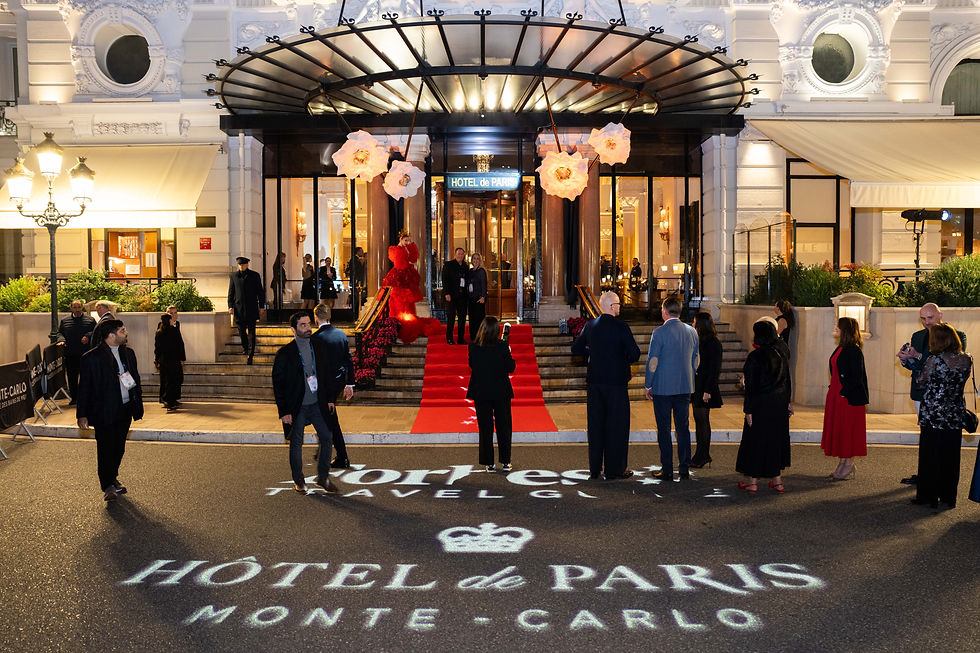
This wasn’t simply about celebrating star ratings. It was about gathering the royalty of hospitality in one place and asking, quietly but clearly: what comes next?
The pacing was intentional. Time to move through rooms. Time to reconnect. Time to reflect. The Summit feels different from other conferences. Less transactional. More collegial.
This was my third time attending the Forbes Travel Guide Summit, and somehow it feels more inspiring each year.
Congratulations to Forbes Travel Guide CEO Hermann Elger and President of Standards and Ratings Amanda Frasier and their team on an outstanding event.

1. Luxury Knows How to Stage Excellence
Throughout The Summit, it was clear that Forbes Travel Guide is not simply in the business of awarding stars. It is in the business of inspiring the people who create stellar experiences.
The closing gala took place in Monaco’s legendary Salle des Étoiles, the breathtaking venue where Princess Grace Kelly established the famed Bal de la Rosé in 1954. Panoramic windows over the Mediterranean. The retractable roof revealed the night sky. Stars above. The Nice Orchestra below. The setting felt symbolic. When you operate at the highest standards, you do not dial down the moment. You elevate it.

Four culinary icons — Alain Ducasse, Yannick Alléno, Marcel Ravin and Cédric Grolet — united for a once-in-a-lifetime menu. Each course was exacting. Each pairing deliberate. Hearing Kristin Chenoweth sing “Popular” from Wicked between courses was joyful and, yes, a little surreal.
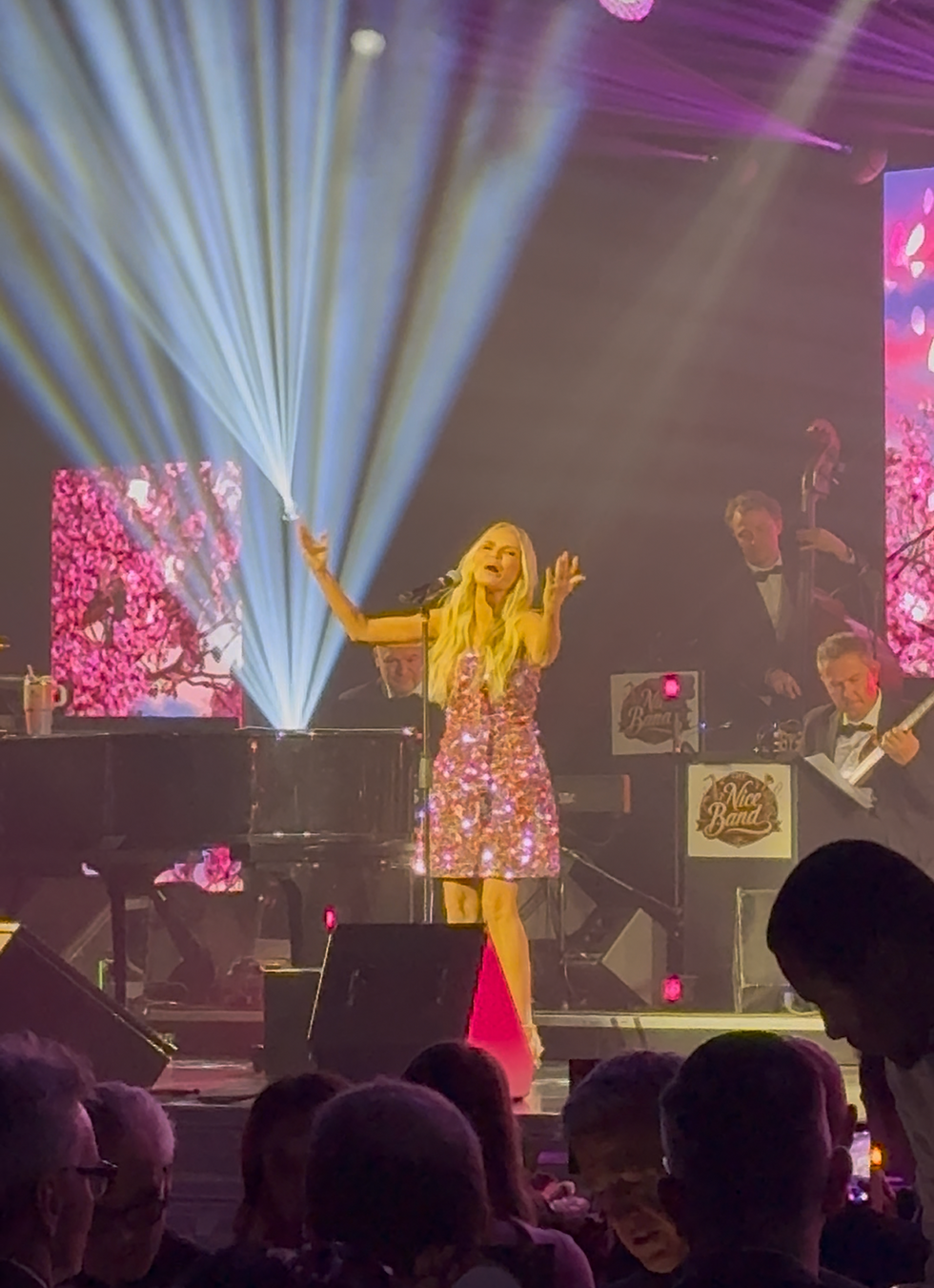
The evening honored leaders at every level of the industry.
I loved seeing Blanca López Giménez of Four Seasons Resort Mallorca at Formentor on stage for Employee of the Year, earned just eight months into her role as a reservations agent. Her warmth and infectious smile are still with me!
Another rising star, Gregor Köck of Rosewood Vienna received the Les Clefs d’Or Young Concierge of the Year Award. Hearing from a young concierge so devoted to anticipation and craft felt grounding. Some forms of excellence do not need reinvention.
Sir Rocco Forte received the Lifetime Achievement Award. The consummate hospitality leader spoke about people first. The room rose to its feet. With his family in the audience, representing the next generation of Forte Hotels, his legacy is visible.
And, Daniel Boulud won an award for his collab for airline food with Air France, "Best In-Flight Culinary" available to passengers traveling in Air France’s La Première and Business cabins from the United States.
These are just a taste of the awards, click here for a full list of special award winners, including another superstar, Sarah Wetenhall, owner of The Colony in Palm Beach which won Luxury Collaboration of the Year.
Icons. Rising stars. Frontline professionals. The Summit celebrated all of them.
2. When Ambition Defies the Participation Gap
Chris Gardner, best known for The Pursuit of Happyness, came to the Summit with a message from his new book, Permission to Dream.
Permission matters. But dreams require discipline. He spoke about resilience, about doing the work long after the applause fades, about building something piece by piece. Success doesn’t arrive fully assembled. You construct it.
Then 17-year old F1 Academy driver, Alba Larsen, shifted the frame entirely. She shared that fewer than five percent of professional racing drivers are female. There are currently no women competing on the Formula One, F2 or F3 grids. The issue, she argued, is not talent, “It’s not a performance gap. It’s a participation gap.”

Rather than waiting for the system to evolve, Larsen launched Girls International Racing Lab (G.I.R.L.), a program giving girls access, mentorship and community in motorsport. When girls race together, she told us, they don’t quit. They build confidence. They get faster. They stay.
What struck me was not just her ambition, but her refusal to treat the pipeline as someone else’s problem.
Hospitality leadership has its own participation gaps. At the Summit, I moderated a panel titled She Sets the Standard, joined by Silvia Nauta, Marlene Poynder, Franck Sibille and Charlotte Weatherall. The conversation was grounded in our inaugural research partnership with Forbes Travel Guide, The Leadership Reset.

Women currently lead 19 percent of Forbes Travel Guide’s global partner hotels. Nearly 80 percent cited mindset and resilience as key drivers of their success.
Sixty-five percent pointed to ambition and determination. Yet 40 percent cited gendered leadership expectations as a barrier. Thirty-four percent cited limited flexibility. Thirty percent cited bias in promotion and hiring. Advancement is deeply personal. The obstacles are structural.
Related reading: The Leadership Reset: Why Women in Hospitality Are Done With Endurance as a Career Strategy
Chris spoke about permission. Alba built a new lane. Our panel asked what it would take to make leadership not just possible, but probable, for the next generation.
Representation determines who enters the race. Systems determine who stays.
3. Loyalty Is Not Cheap. It’s Strategic.
Brian Kelly of The Points Guy, which incidentally attracts more than 10 million unique visitors each month, delivered humor and hard truths.
First, fix the basics. Blackout shades that actually black out. No more peekaboo bathrooms. No showers without doors. Nobody wants a flooded floor. Luxury begins with getting the fundamentals right.
Then he zoomed out. Loyalty, he argued, is not about discounts. It is not about giving something away. It is about building durable relationships in uncertain times. Recognition matters. Being known matters. Feeling valued matters.
Consumers today are willing to pay more if they receive more. Not just amenities, but consistency. Stability. Confidence that the experience will deliver. In an environment where travelers are navigating economic uncertainty and shifting expectations, repeat guests are not just a bonus. They are ballast. In a volatile market, loyalty becomes resilience.
4. Data Is Taking Over the Luxury Conversation
When Ankur Jain, founder and CEO of Bilt Rewards and Jeff Arnold, Chairman of Forbes Travel Guide, unveiled "Bilt Verified," it felt less like a product launch and more like a directional shift.
Bilt, which serves more than 5.5 million U.S. households through its rent and mortgage rewards platform, is now connecting its member base directly with Forbes Travel Guide’s Star-Rated hotels. The goal is clear: smarter matchmaking powered by data.

Through Bilt’s AI-powered Neighborhood Concierge, users can manage everything from rent payments to restaurant reservations to travel bookings.
Now, with Bilt Verified, that ecosystem extends to luxury hotels, surfacing personalized recommendations and enabling direct booking, guest recognition and commission processing, while hotels retain control over pricing, inventory and loyalty programs.
Jeff Arnold called it “the greatest matchmaking opportunity” in hospitality.
Discoverability is the new battleground. If AI agents are increasingly guiding travel decisions, hotels must ensure they are visible — and properly understood — within those systems.
For travel advisors, Bilt will integrate directly into Forbes Travel Guide’s Meridian platform, now rebranded Meridian V. The move positions Bilt’s concierge tools as support for advisors rather than competition, reinforcing collaboration across the ecosystem.
Luxury has always run on relationships. Now it will run on data ecosystems that make those relationships more precise.
5. AI Should Make Hospitality More Human
As part of the keynote series, Christopher Sanderson, co-founder of The Future Laboratory, outlined what he described as a pivotal moment for luxury hospitality. Drawing on proprietary Future Poll research surveying 2,000 luxury travelers in the US and UK, he shared that 60 percent of luxury guests now rank both exceptional service and innovative technology among their top booking priorities.
At the same time, 63 percent say service must remain human-first. And 55 percent cite data protection as a primary concern.
Guests want personalization. They want seamlessness. But they also want control.
Sanderson’s argument was not that AI replaces high-touch hospitality. It is that it should amplify empathy, anticipation and discernment — the very qualities luxury depends on.

That macro lens came into sharper focus during a Discovery Session moderated by Forbes Travel Guide Chief Strategy and Innovation Officer Stuart Greif.
Three points stood out.
First, operational efficiency is not the enemy of service. Shannon McCallum, Vice President of Hotel Operations at Resorts World Las Vegas, shared that the property’s digital assistant handled 459,000 guest requests this year, reducing call abandonment from 30 percent to 3 percent. In a 3,500-room hotel, that scale matters. Automation freed teams to focus where human connection actually counts.
Second, discoverability is changing rapidly. Janet Semenova, Co-Founder and CEO of Boutique Travel Advisors, explained that luxury search is becoming contextual and conversational. Travelers are no longer typing “best hotel in Monaco.” They are asking layered, specific questions. Content strategies and digital visibility must evolve accordingly.
Third, and most important, AI is not the star. Humans are.
Gilad Berenstein, Founder of Brook Bay Capital and an investor in travel tech, grounded the discussion with a reminder that felt distinctly hospitality-forward: “We are in the business of creating moments that cannot be replicated by algorithms.” The best companies are not chasing faster or cheaper. They are focused on more meaningful, more personal, more human.
Technology should remove friction. The magic still happens face to face.
6. From Experience to Transformation
Joe Pine first introduced the experience economy decades ago. Now the bestselling author is advancing the transformation economy. It is not enough to provide excellent service. It is not even enough to create memorable experiences. The next frontier is transformation. How does the guest feel different afterward?
Dr. Aradhana Khowala reinforced this shift with data. Seventy percent of affluent travelers value experiences over material goods. Fifty-seven percent cite awe and wonder as primary motivations for travel.

Luxury is increasingly about emotional resonance. Experiences that trigger memory. Moments that spark gratitude. Travel that expands perspective rather than simply fills time.
Journalist Rajan Datar illustrated this beautifully by centering his talk with a story about a shared musical connection with a New York taxi driver. It was simple. It lingered. That is the difference.
7. Wellness Is No Longer an Amenity. It’s an Identity.
PwC’s Ali Furman outlined one of the most unexpected drivers reshaping consumer behavior: GLP-1 weight-loss drugs.
In the United States, 20 percent of households now have at least one GLP-1 user. These consumers spend 4 to 6 percent less on groceries, consume 80 percent fewer desserts and 33 percent less alcohol, and are shifting from indulgent travel toward active and wellness-based vacations.

This is not a passing diet trend. It is a physiological shift affecting purchasing behavior, menu preferences, programming and design.
Wellness is no longer aspirational. It is baseline. Tammy Pahel of Carillon Miami Wellness Resort reinforced this. The spa is evolving into a longevity platform: hormone optimization, brain health programs, hyperbaric therapy, sleep optimization, functional medicine partnerships.
Luxury properties that still treat wellness as a spa menu category rather than a cross-property strategy may find themselves behind. Guests are arriving with health journeys already underway. The hotels that meet them there will win.
The Discipline Beneath the Spectacle
The Summit was celebratory. It was also directional.
Historic setting. Legendary chefs. Loyalty reframed. Data ecosystems. AI deployed thoughtfully. Transformation elevated. Wellness redefined.

Honestly, I’m still thinking about the first night, when we had the chance to step inside the Cédric Grolet lab at the Hôtel de Paris, surrounded by endless rows of his trompe-l’œil masterpieces. Fruit that looked just plucked from a market stall. Flowers formed from cream and chocolate with surgical precision. Almost too beautiful to touch. Almost. I tried them all. (Strictly professional research, obvs!)
What makes them unforgettable isn’t just the visual drama. It’s the technical precision underneath. The discipline. The craft. The substance behind the spectacle.
That felt like the right metaphor for this year’s Summit.
Luxury at its best is not excess. It is intention. Not louder. Sharper. Not show for show’s sake, but mastery.
I was also part of a small media cohort that included journalists from Afar, Travel + Leisure, the BBC and other global outlets, a reminder that what happens at The Summit reverberates far beyond Monaco.
The Forbes Travel Guide Summit did what it always does. It celebrated the best.
This year, it showed how the next era of luxury is taking shape in real time.
For more images of The Summit, check the Forbes Travel Guide Instagram.


