.png)
Mr. May: Greg Smith of Preferred Hotels & Resorts on Love as a Leadership Philosophy

Plenty of HR leaders talk about empathy, psychological safety, and emotional intelligence. Very few use the word love. At the Cornell HR in Hospitality Conference, Greg Smith used it again and again, not as sentiment, but as a philosophy of leadership.
Greg, who is SVP People and Community at Preferred Hotels & Resorts, was being honored with the Cornell HR Thought Leader Award for 2026. From the stage, he described love at work as "an emotional commitment to being strong, not necessarily being right": the courage to tell the truth, the patience to listen, the humility to ask for help, and the humanity to treat people with dignity, especially when the conversation is hard.
Listening to him speak, it was clear why he was receiving the award. His approach is thoughtful, humane, and quietly provocative, grounded in the belief that HR's real power is not control, but influence, honesty, and care. I knew he had to be hertelier's Mr. May.
Greg has spent more than eight years at Preferred, following a career that has taken him from labor relations at General Electric to roles with Interstate Hotels, Kimpton, Denihan Hospitality, and Commune Hotels & Resorts. Along the way, he has built a reputation as a trusted advisor and generous mentor, and, as one colleague put it at the conference, "one of the nicest people on the planet." But anyone who has worked with him knows the niceness is paired with sharp business judgment and a clear sense of HR's responsibility to influence decisions, not merely enforce rules.
When we spoke after the conference, Greg resisted any overly tidy definition of allyship.
"Ally, advocate, champion, I'm all of those," he said. "But I think the goal is to find people who are aligned with your beliefs, people who are looking for support, and people who are looking for other voices and champions."
Allyship, for him, is about paying attention: noticing who needs support, who is ready for the next opportunity, and who might benefit from another voice in the room.

"Stop talking and listen."
When asked what advice he would give men who want to be better allies to women, Greg did not hesitate. "Listen," he said. "Stop talking and listen."
It is simple advice, but in a workplace culture where many people are still rewarded for having the fastest answer or loudest voice, it remains surprisingly powerful.
He is clear, too, that he does see gender. He does not believe leadership happens in a vacuum, or that people arrive at work as identical blank slates. "It would be naive to say we don't see gender," he said. "We see all of these things that make us the complete and total person that we are."
That awareness has shaped the way he looks for talent, supports people, and recognizes who may need help, encouragement, sponsorship, or simply someone in the room willing to say, "I see what you can do."
One example is Heather Berti, whom Greg hired nearly 15 years ago when she was working in Toronto. He brought her to the U.S. to work in New York. Today, she is Chief Human Resources Officer for Arlo Hotels.
"I would hope I'm aware enough and in tune enough, and that my personal North Star is calibrated so that I look and listen for people who want help, who need help, and who believe in support," he said.

The women who shaped his leadership
Some of his strongest mentors, he is quick to point out, have been women, and the name he returns to again and again is Niki Leondakis, the former president of Kimpton Hotels, who hired him and helped him rethink what leadership could feel like.
"She told me, you need to focus on those things that are really important to you emotionally," Greg said. "Working for large companies is not a bad thing, but is it fulfilling? Are you getting to have the impact you want to have?"
Leondakis also gave him language for something he had felt but had not yet fully named: love in the workplace.
"She was the first person who spoke to me about love being essential," he said. "Not romantic love, but the innate goodness that comes from doing what's right, supporting what you believe, even when that requires taking unpopular stances."
For him, love is not about avoiding difficult conversations. It is what allows you to have them.
Why women still need more support
Greg has a clear theory about why women in hospitality often progress through the ranks but thin out at the most senior levels. The answer, he says, is support.
"As women start to progress, unlike a lot of men, they don't always have the support they need," he said. "A lot of men take for granted that there's someone at home managing their schedule, their children, their home, helping them complete their life. I don't think women fall into that luxury as easily."
That lack of support, he believes, has a direct impact on advancement. "I truly don't believe any of us can do it all. If you don't have that support, you're going to find yourself on this journey without one paddle."
His own life has reinforced this lesson. Greg has been married to his husband for 42 years and speaks with deep appreciation about the support that made his career possible. It is not lost on him that a gay man, in a long marriage, is the one making this argument about what women need at home. He knows what it looks like to build a life where one partner's career is genuinely possible because the other one is there.
"The game plan has been, you go do what you have to do. Home will be here. The kids will be here," he said. "You can't do it alone. You have to recognize that people give up things for you and appreciate that."
Less control, more influence
At the conference, Greg warned that HR's long-fought "seat at the table" is not guaranteed. During and immediately after COVID, leaders were intensely focused on talent, staffing, and retention. But as economic pressure rises, he sees the conversation shifting back toward dollars and cents.
His message to HR leaders is simple: if you want influence, understand the business, build credibility, and use that credibility to create more humane organizations.
It is worth noting that Greg's actual title at Preferred is SVP People and Community, not Human Resources or Talent. The role is defined as something broader than policy and process, and Greg leads it that way.
That same belief came through in one of his more provocative comments, when he questioned the sacred status of employee handbooks. "I do not think a handbook helps you lead with love," he said.
Greg is not arguing against policy. He is challenging HR leaders to ask whether tools designed for consistency can sometimes become substitutes for judgment, courage, and actual leadership. "I think it's less and less about control these days. What you want is influence."
"Look for help"
When asked what advice he would give his successor, Greg's answer was strikingly humble.
"Look for help," he said. "If you want to succeed, you're not going to succeed by yourself. Look for partners. Look for mentors. Look for people you can champion. Look for people who will champion you."
Greg does not see mentorship as a one-way benevolent act from senior person to junior person. It is a network of care, challenge, and belief. He also wishes he had spent more time earlier in his career helping younger leaders slow down, breathe, and reassess.
"I thought I was coaching," he said. "I thought I was helping people see what had been and what could be. But what I really regret is not spending more time listening."
Finding the right culture
Across his career, Greg has often found himself drawn to companies led by women or shaped by women leaders, including Kimpton, Denihan Hospitality, Commune, and Preferred Hotels & Resorts, where he noted that more than half of senior leaders are women.
"I'm not sure I chose to work at them because they were female-led," he said. "But if they are female-led, they do tend to focus on things that are important to me."
Those things include purpose, care, flexibility, creativity, and the belief that business success and humanity do not have to be opposites. "Organizations that women tend to prosper in are also organizations that I tend to prosper in," he said. Workplaces where women can thrive tend to be better workplaces for many people. They are more flexible, more humane, more honest about life outside the office, and less obsessed with outdated ideas of command-and-control leadership.

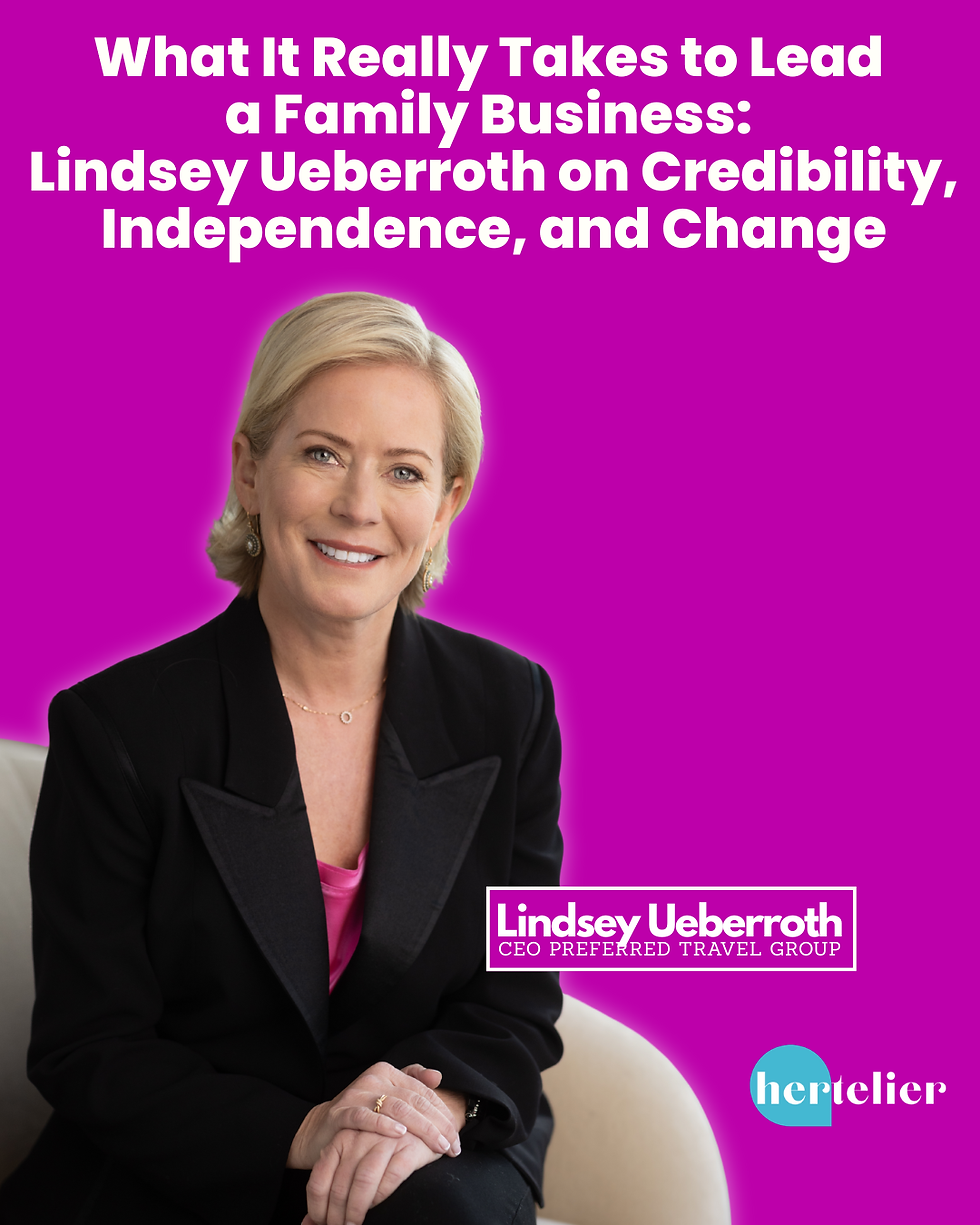
At Preferred, Greg describes CEO Lindsey Ueberroth as both visionary and real. "She means what she says. She understands that it's a growth journey for her, just like it is for everybody else." That matters to him, but so does what that leadership style enables. Although he spends significant time in company offices around the world, he is based in New Orleans, where his two sons, both studying hospitality and management, are at university nearby.
"The way Lindsey leads, and the way a lot of women lead, is that flexibility and my needs are important to helping me figure out how I can then support and champion the company's needs," he said.
The universe bends toward justice
He left the conference audience with this: "Lean into those things that bring you joy. Keep those batteries adequately charged so that you can take risk and pay attention to what in the hell is going on around you."
Near the end of our conversation, Greg quoted Martin Luther King Jr., reflecting on the idea that the moral arc of the universe bends toward justice.
"But it is slow," Greg said. "Very slow. And we all have to put our weight on that end to help it move, maybe just a little bit faster."
For Greg, allyship is not complicated, but it does require action: listen closely, notice who needs support, and use whatever influence you have to help move things forward.