.png)
Edge Hotel School Women in Hospitality: The Conversations I’m Still Thinking About

I spend my days immersed in women’s leadership in hospitality. It’s what I research, study, and write about daily at hertelier.
So I didn’t expect to walk into the Edge Hotel School Women in Leadership conference and leave with so many new notes in my phone. But I did.
What made the day stand out was the combination: students who were genuinely curious, speakers who were willing to be honest, and panels that treated women’s workplace realities as central to retention, progression, and leadership.

Here’s what I took away about women’s leadership in hospitality, workplace wellbeing, and what employers can do next.
5 career tips I shared with students
1. Share your ambitions and ask for a roadmap. What skills, projects, or experiences would you prioritize to get there? Supervisors and managers can’t support what they don’t know, tell them!
2. Take risks and raise your hand sooner. The roles that stretch you are rarely the ones you feel fully ready for on day one, and most people grow into the job while doing it.
3. Choose the boss, not the title. Find a leader who will teach you, push you, and advocate for you, in a company whose values (and opportunities) match your own.
4. Don’t worry too much about failure. You learn valuable lessons through the moments that don’t go to plan, and that’s how you build resilience, which is essential for long-term success.
5. Build your network by asking for advice. People genuinely like helping when you make it specific. And yes, it works even if you feel awkward. Read this for top networking tips and the science behind why asking for help works.

Equality in Tourism: Why gender equality matters in travel
Before the panels, Stroma Cole, founder of Equality in Tourism, gave a keynote that pulled the conversation outward.
Her message: tourism employs more women than men, yet the sector still has a significant gender pay gap and persistent inequality at work. And it’s not only women inside companies who feel the impact. Women in destinations are often the ones who pay the highest price when destructive tourism practices are driven by larger organizations.
Equality in Tourism’s mission is to change that. To push for a tourism industry that supports women and has a positive impact on everyone involved.
Cole also shared that Equality in Tourism runs an annual Gender Equality Champion of the Year Award which recognizes travel and hotel companies taking meaningful action, and there’s still time to enter for 2026!
Kalindi Juneja on wellness and learning cultures
A highlight for me was interviewing Kalindi Juneja, CEO of PoB Hotels, a collection of 57 luxury hotels in the United Kingdom. She spoke candidly about her career journey and shared so much useful advice that I’ll be doing a follow-up conversation with her soon.
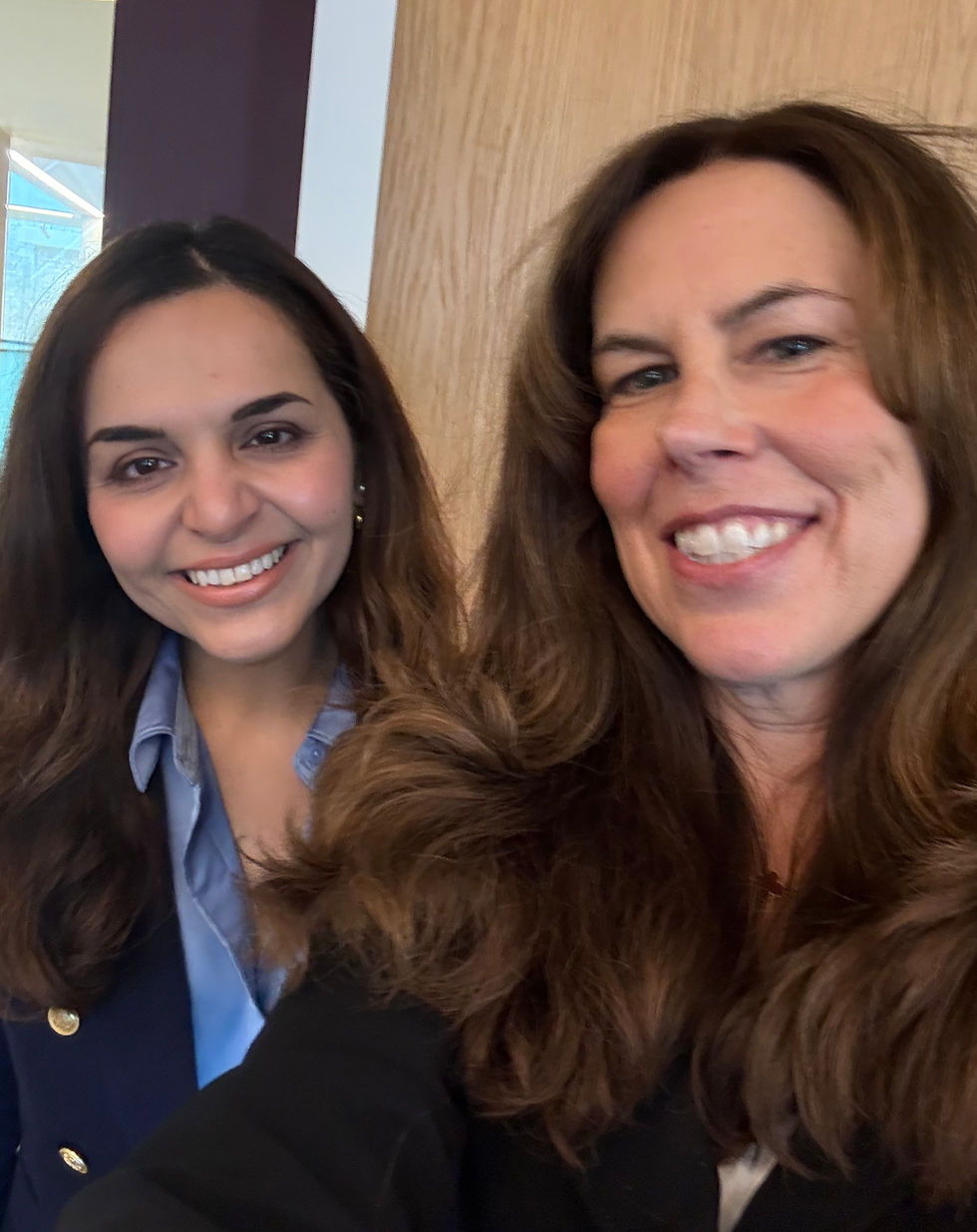
The biggest takeaway, and the one thing she wishes she’d prioritized earlier, was wellness and self-care. She talked openly about spending years working long hours, putting herself last, and eventually realizing it simply wasn’t sustainable.
Kalindi also stressed the value of staying in learning mode and choosing workplaces with a true culture of mentoring and development, especially early in your career. But don't expect the company to do all the work, she advised, take it upon yourself to build a routine of learning into your personal habits.
How She Does It: Confidence, credibility, and leadership in hospitality
The HOW SHE DOES IT panel, moderated by Dr Whitney Vernes-Smith (Edge Hotel School), centered on the realities women face as they build confidence and credibility, especially in industries where leadership still comes with extra scrutiny.
What stayed with me is how clearly the conversation framed confidence as a workplace issue, not a personality trait. Women often feel they need to be more than ready before putting themselves forward. Men are more likely to try first, polish later.
The point wasn’t to tell young women to become louder or more like men. It was to name the gap so we can stop pretending it’s just how it is.
With Caroline Gould (Entrepreneur), Zoe Monk (Boutique Hotelier), and Brett Smith (Hotel Saint) on stage, the discussion stayed grounded in real experience, not perfect career narratives. The conversation echoed something I hear again and again in my reporting: authenticity isn’t a vibe or a “personal brand.” It’s consistency. People notice how you show up under pressure, how you treat others when no one’s applauding, and whether your words match your decisions. That’s how trust gets built in real workplaces.
Women’s workplace wellbeing: menstruation, menopause, caregiving, pay gap, and safety
If the first panel was about confidence and career-building, the second panel was about what women are carrying while they do it.
SPOTLIGHT ON: WOMEN’S WORKPLACE WELBEING, moderated by Jenny Kaye (Edge Hotel School), went straight into topics that workplaces have historically encouraged women to manage quietly: menstruation, menopause, and caregiving.
And then the conversation widened into systems: the gender pay gap, transparency, and why policy only matters if people can see the reality and trust the process.

But the moment I can’t stop thinking about came mid-discussion. They asked the room if anyone had ever been treated inappropriately at work in hospitality.
About 90% of hands shot up (sadly I was not fast enough with my phone to snap a pic!)
That one question cut through all the polite language we tend to hide behind. It made the issue visible. And once that happens, you can’t unsee it.
From there, the conversation about prevention, reporting, and manager response didn’t feel like HR box-ticking. It felt urgent, and overdue.
Panelists included Stefan Jordan (University of Sunderland), Michelle Moreno (QAB Leadership), and Karen Bowlby (University of Essex). The tone was pragmatic: what needs to change, what managers need to be equipped to handle, and what workplaces can do to stop leaving women to navigate these realities alone.
In hospitality, where so many roles are physical, customer-facing, and not always flexible, support can’t be theoretical. It has to show up in the practical details: manager training, flexibility that works on the floor (not just in a policy document), uniforms and breaks, and processes people trust when something is unfair or unsafe.
What gave me real hope was seeing how normal these conversations felt to the students in the room. That normalization matters. When future leaders treat these realities as normal parts of work life, stigma drops, transparency rises, and the industry becomes far more likely to retain women through mid-career and into senior leadership.
The day ended with a wine tasting sponsored by Hallgarten & Novum Wines, which turned out to be a great way to keep the conversations going. With about 100 people in the room, it was an easy moment to chat with students and industry attendees without the formality of a microphone. Cheers to that.
What employers can do next
The students are watching closely. Now the industry has to meet that moment with action.
You need workplaces where ambition is met with opportunity and a roadmap. Where development is consistent, not selective. Where transparency is real (pay, progression, expectations). Where managers are trained for real life, not ideal life. And where safety is treated as a baseline, not a nice-to-have.
At one point, someone joked about it being time to move on from “male, pale and stale.” Catchy, yes, but the bigger point is serious: the default has been too narrow for too long. The encouraging part is that this conference didn’t feel stuck in complaint mode. It felt like momentum, and a pipeline.
They’re ready. The question is whether the industry is.


